A history of money in Cyprus
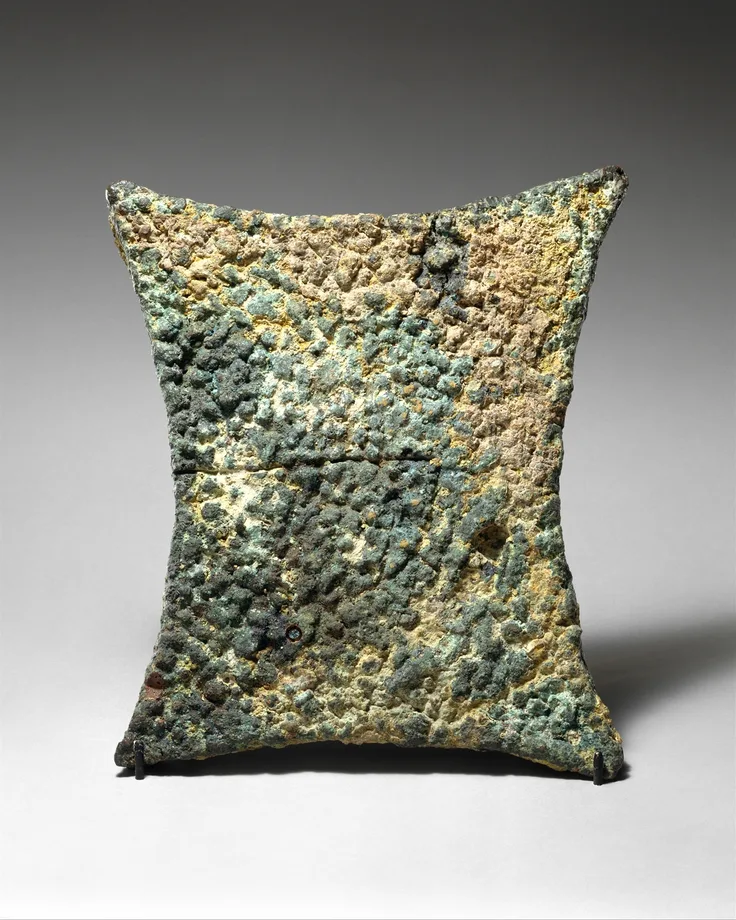
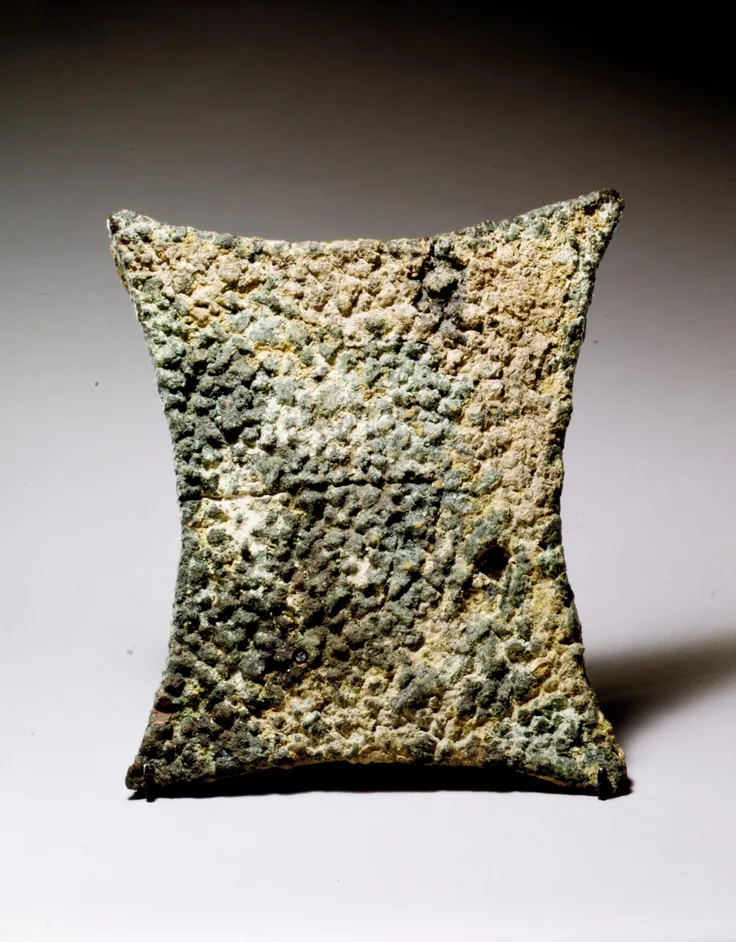
How did the Republic of Cyprus reach the euro? It inherited a pound divided into mils, changed that subdivision to cents in 1983, and adopted the euro in 2008. Earlier surviving coins record denominations and issuing authorities in Cypriot cities; a copper ingot predates those coins.Source: Central Bank of Cyprus, Cyprus poundOpens in a new tabGo to the list of sourcesSource: Central Bank of Cyprus, Pictures and descriptions of Cyprus pound coinsOpens in a new tabGo to the list of sourcesSource: The Metropolitan Museum of Art, Copper ingotOpens in a new tabGo to the list of sourcesSource: Staatliche Museen zu Berlin, Amathos silver coin, Berlin 18217648 (English interface)Opens in a new tabGo to the list of sourcesSource: Staatliche Museen zu Berlin, Evagoras I stater from Salamis, Berlin 18217644Opens in a new tabGo to the list of sources
Copper and coins made in Cypriot cities
Copper from Cyprus moved as ingots across the eastern Mediterranean. The Metropolitan Museum of Art dates this Cypriot ingot to about 1450–1050 BCE and records its weight as 28.6 kilograms.Source: EKT SearchCulture.gr — museum catalog metadata, Τάλαντο χαλκού σε σχήμα "δοράς βοός"Opens in a new tabGo to the list of sourcesSource: The Metropolitan Museum of Art, Copper ingotOpens in a new tabGo to the list of sourcesFigures computed by FXtab from:Central Bank of Cyprus, Cyprus poundOpens in a new tabEuropean Central Bank, Cyprus euro changeoverOpens in a new tabThe Metropolitan Museum of Art, Copper ingotOpens in a new taband 2 moreGo to the list of sources
Barclay V. Head’s 1911 manual (p. 736) places the start of Cyprus’s own coinage in the later sixth century BCE. Its list includes Salamis, Idalion, Paphos, Marion, Soloi, and Amathos. Head also warned that the attribution of many coins remained uncertain.Source: Oxford Clarendon Press, Historia Numorum (1911), Barclay V. Head, Historia Numorum: A Manual of Greek Numismatics, new and enlarged edition (1911)Opens in a new tabGo to the list of sources
Berlin’s Münzkabinett records a silver coin struck at Amathos about 460–450 BCE. It calls the denomination one-twelfth of a siglos. One face shows a lion; the other shows the forepart of a lion. A later silver stater from Salamis belongs to the reign of Evagoras I, about 411–374/373 BCE. The catalog attributes it to him using the Cypriot letters on the two faces, which give his name and the Greek word for king.Source: Staatliche Museen zu Berlin, Amathos silver coin, Berlin 18217648 (English interface)Opens in a new tabGo to the list of sourcesSource: Staatliche Museen zu Berlin, Evagoras I stater from Salamis, Berlin 18217644Opens in a new tabGo to the list of sources
Another Berlin coin, a gold stater attributed to the Salamis mint about 315–300 BCE, carries Athena’s head on one face and Nike with the name of Alexander on the other. The Metropolitan Museum of Art records a separate Cypriot gold coin dated approximately 312–306 BCE.Source: Staatliche Museen zu Berlin, Alexander-type gold coin minted at Salamis, Berlin 18202954Opens in a new tabGo to the list of sourcesSource: The Metropolitan Museum of Art, Gold coin, Cypriot, ca. 312–306 BCEOpens in a new tabGo to the list of sources
A silver tetradrachm in Berlin is attributed to Demetrios Poliorketes and the Salamis mint, about 300–295 BCE. Its two sides show Nike on a ship’s prow and Poseidon holding a trident.Source: Staatliche Museen zu Berlin, Demetrios Poliorketes, tetradrachm, Salamis, about 300–295 BCE, Münzkabinett 18203008Opens in a new tabGo to the list of sources
Gold coins from Ptolemaic mints
Ptolemaic Coins Online identifies a gold coin type of Ptolemy I Soter with the Salamis mint, dated 311–306 BCE. Both sides bear the head of Aphrodite, with different headwear. Another gold type, attributed to Ptolemy II Philadelphus and dated 261–252 BCE, names Paphos as its mint. Its front shows Arsinoe II and its reverse a Two linked horns of plenty filled with fruit on the coin’s reverse.Source: American Numismatic Society, Ptolemaic Coins Online, Coins of the Ptolemaic Empire Vol. I, Part 1, no. 492Opens in a new tab.Source: American Numismatic Society, Ptolemaic Coins Online, Coins of the Ptolemaic Empire Vol. I, Part 1, no. 214Opens in a new tabGo to the list of sourcesSource: American Numismatic Society, Ptolemaic Coins Online, Coins of the Ptolemaic Empire Vol. I, Part 1, no. 492Opens in a new tabGo to the list of sources
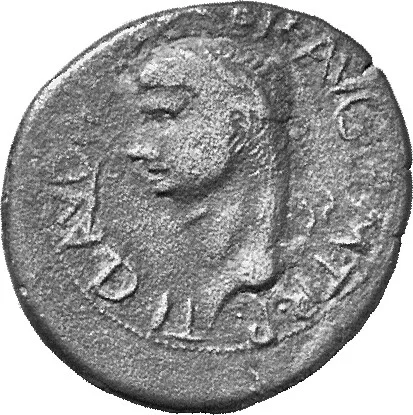
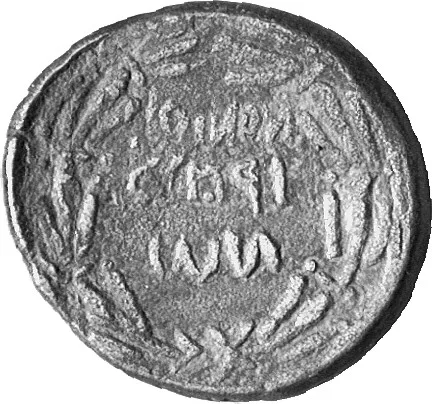
A bronze coin of Claudius in Berlin’s Münzkabinett measures 32 millimeters across and weighs 17.33 grams. The museum dates it approximately to 43–44 CE by comparison with coins naming the proconsul Cominius Proculus, and lists Paphos as a possible mint. The catalog title identifies the Koinon of Cyprus: Claudius’s head and titles appear on the front, while the reverse inscription names the The issuing authority named on this Roman coin. Berlin’s coin catalog lists it as the Koinon of the Cypriots.Source: Staatliche Museen zu Berlin, Koinon of Cyprus, Claudius, AD 43–44 — Berlin 18238712Opens in a new tab within a wreath.Figures computed by FXtab from:Central Bank of Cyprus, Cyprus poundOpens in a new tabEuropean Central Bank, Cyprus euro changeoverOpens in a new tabThe Metropolitan Museum of Art, Copper ingotOpens in a new taband 2 moreGo to the list of sourcesSource: Staatliche Museen zu Berlin, Koinon of Cyprus, Claudius, AD 43–44 — Berlin 18238712Opens in a new tabGo to the list of sources
Bronze coins under Byzantine rule
Warwick Wroth’s 1908 British Museum catalog (p. ci) assigns bronze coins to Cyprus under the Byzantine emperor Heraclius, around 627–628 CE. It places the mint probably at Constantia.Source: British Museum, Warwick Wroth Byzantine coin catalog (1908), Warwick Wroth, Catalogue of the Imperial Byzantine Coins in the British Museum, vol. I (1908)Opens in a new tabGo to the list of sources
A silver coin of Henry I
The Met records a silver denier of Henry I of Cyprus, dated 1218–53, that was excavated near Acre.Source: The Metropolitan Museum of Art, Coin (Denier) of Henry I of Cyprus (1218–1253)Opens in a new tabGo to the list of sources
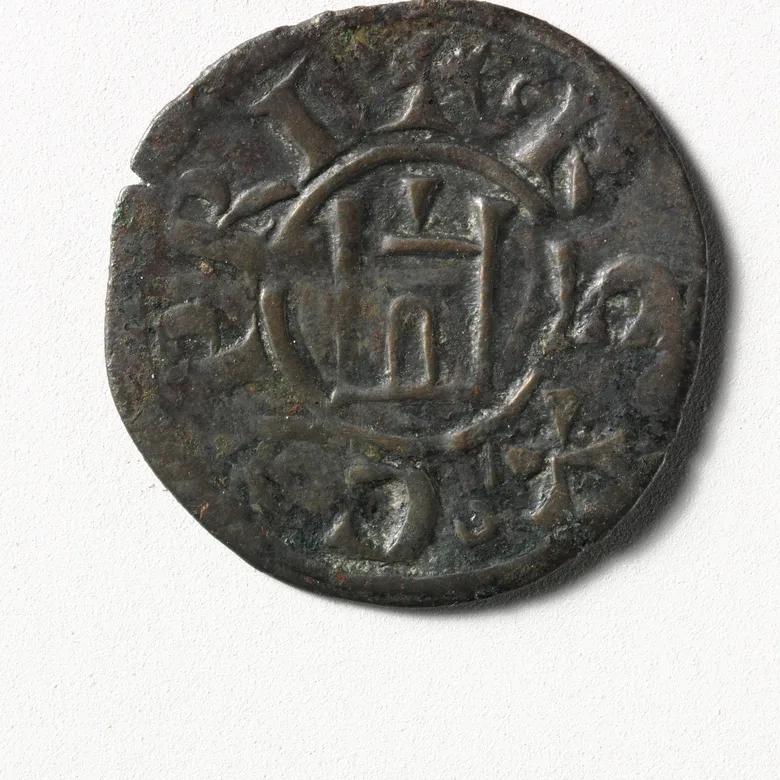
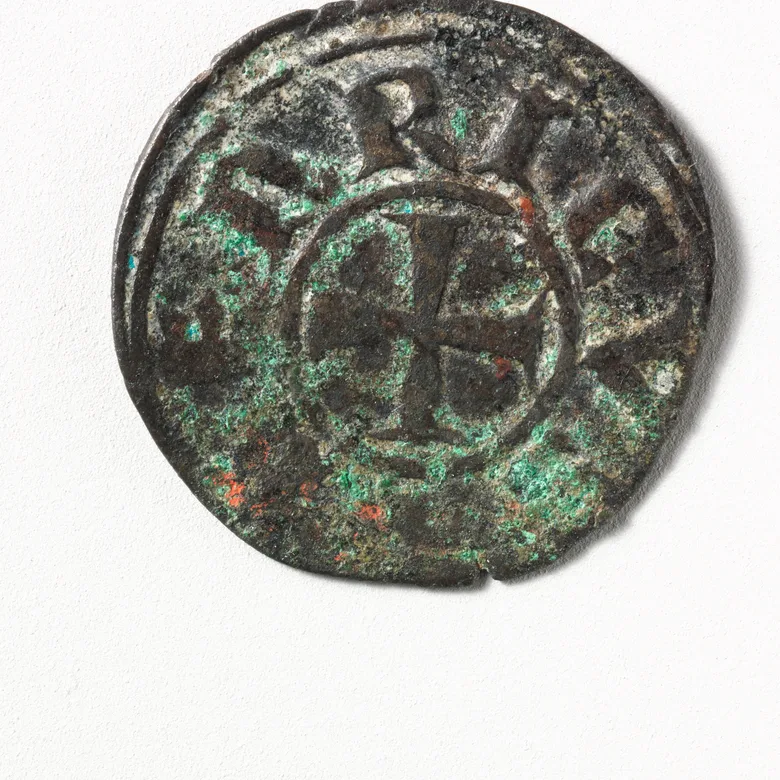
About 1340, Pegolotti described two sizes of Cypriot silver grossi. In the passage on p. 175 restored by Lambros and reproduced by Schlumberger, two large or four small grossi counted as one white bezant. The account compares coin values under the Lusignans.Source: Gustave Schlumberger, Numismatique de l’Orient latin (1878), Gustave Schlumberger, Numismatique de l’Orient latin (1878)Opens in a new tabGo to the list of sources
Venetian orders for small coins
Cyprus still needed small coins under Venetian rule. In a 1900 study, the politician and numismatics collector Nicolò Papadopoli reported finding an order of the A magistracy of the Republic of Venice.Source: Wikidata, Council of Ten (Q547077)Opens in a new tab, dated October 24, 1515, to strike coins in Venice for Cyprus. He reported a second order, dated July 29, 1518, for the requested small coins to be struck on the island.Source: Library of Congress Name Authority File, Papadopoli Aldobrandini, Nicolò, 1841–1922 — name authorityOpens in a new tabGo to the list of sourcesSource: Società Numismatica Italiana — Rivista italiana di numismatica, Nicolò Papadopoli, Carzie per Cipro coniate dai veneziani nel 1515 e 1518, Rivista italiana di numismatica XIII (1900), pp. 321–325Opens in a new tabGo to the list of sources
Travelers’ coin values and purchases under Turkish rule
Villamont’s account of his visit in 1589 puts a gold sultan at 120 aspres
Source: Claude Delaval Cobham, Claude Delaval Cobham, Excerpta Cypria (1908)Opens in a new tabGo to the list of sources, small silver coins. Cobham’s Excerpta Cypria translates the description on p. 177. Fynes Moryson recorded food purchases during his visit in 1596: a cheese cost four Aspers
Source: Claude Delaval Cobham, Claude Delaval Cobham, Excerpta Cypria (1908)Opens in a new tabGo to the list of sources, and a jar of oil six. Those are Moryson’s reported purchase prices.Source: Claude Delaval Cobham, Claude Delaval Cobham, Excerpta Cypria (1908)Opens in a new tabGo to the list of sources
Ottoman denominations and a British proclamation
The High Commissioner changed which coins the island’s treasuries would take before the Queen’s proclamation of 1882. A notice in the January 1, 1879 Cyprus Gazette barred imports of three named coin types from January 15. The March 13 notice stopped government treasuries from taking Metallique Piastres after its date, and Caimé, Altaliks and Beshliks after March 31. Those notices governed imports and government receipts.Source: Cyprus Library, Ministry of Education, Sport and Youth, The Cyprus Gazette 1878–1884Opens in a new tabGo to the list of sourcesSource: The London Gazette, The London Gazette, 12 May 1882, Cyprus currency proclamation, printed p. 2208Opens in a new tabGo to the list of sources
The July 31 Gazette notice listed the English, Turkish and French gold coins, specified silver coins and new English copper piastres that would be received into and paid out of treasuries from September 1. It set the English copper piastre at 40 paras and its half at 20. A correction on August 22 allowed English copper coins, pennies and halfpennies, to be received through August 31 but ended government acceptance of Turkish copper coins. The notices appear on printed pages 4, 16, 36 and 39 of the Gazette volume.Source: Cyprus Library, Ministry of Education, Sport and Youth, The Cyprus Gazette 1878–1884Opens in a new tabGo to the list of sources
An 1883 British Museum catalog (Introduction, p. xxv) says the Ottoman piastre was divided into 40 paras down to the time of Abdülmecid. The currency proclamation for Cyprus, issued in 1882, listed three bronze coins: a piastre worth 40 paras, a half piastre worth 20, and a quarter piastre worth 10. The document set a sovereign at 180 Cyprus piastres and a Turkish lira at 162. Those values were to apply from a day to be fixed by the island’s High Commissioner, while debts from older contracts expressed in silver piastres could be discharged in gold coin at 120 silver piastres to the sovereign.Source: British Museum, Catalogue of Oriental Coins, vol. VIII (1883), Stanley Lane-Poole, Catalogue of Oriental Coins in the British Museum, vol. VIII: Ottoman sultans (1883)Opens in a new tabGo to the list of sourcesSource: The London Gazette, The London Gazette, 12 May 1882, Cyprus currency proclamation, printed p. 2208Opens in a new tabGo to the list of sources
By 1907, Hutchinson and Cobham’s Handbook of Cyprus described the silver Mejidie, beshlik, and aqcha or aspre as coins that had long ceased to circulate on the island. Its currency section (p. 111) distinguishes the copper piastre from the silver piastre of Turkey and lists the coins authorized under the 1900 order. A pound equaled 180 Cyprus piastres; each piastre divided into 40 paras.Source: Joseph Turner Hutchinson and Claude Delaval Cobham, A Handbook of Cyprus (1907), A Handbook of Cyprus (1907), Hutchinson and CobhamOpens in a new tabGo to the list of sources
Government notes in 1917–1918
The Cyprus Blue Book for 1917–18 lists government currency notes (section XXI, p. 238). A dagger beside the currency-notes heading refers to the proclamation of September 2, 1915. A double dagger beside £10 refers to September 5, 1917. The table equates the £1 note with 180 Cyprus piastres and the £10 note with 1,800.Source: Government of Cyprus historical publications, Cyprus Blue Book 1917–18Opens in a new tabGo to the list of sources
The Republic’s coins and banknotes
In 1955, the British administration introduced the mil system. The Republic’s first coins were minted in 1963, retaining mil denominations while replacing the three-mil coin with a one-mil coin. The set contained one, five, twenty-five, fifty, and one hundred mils.Source: Central Bank of Cyprus, Pictures and descriptions of Cyprus pound coinsOpens in a new tabGo to the list of sources
Early banknotes of the Republic were denominated in 250 mils, 500 mils, £1, and £5. A £10 note followed in 1977. In October 1983, the pound’s subdivision changed from 1,000 mils to 100 cents, and the mil notes were withdrawn. A 50-cent note appeared with the new system and was replaced by a coin in 1991. In 1992 the £20 note arrived.Figures computed by FXtab from:Central Bank of Cyprus, Cyprus poundOpens in a new tabEuropean Central Bank, Cyprus euro changeoverOpens in a new tabThe Metropolitan Museum of Art, Copper ingotOpens in a new taband 2 moreGo to the list of sourcesSource: Central Bank of Cyprus, Pictures and descriptions of banknotesOpens in a new tabGo to the list of sourcesSource: Central Bank of Cyprus, Pictures and descriptions of Cyprus pound coinsOpens in a new tabGo to the list of sourcesSource: Central Bank of Cyprus, Cyprus poundOpens in a new tabGo to the list of sources
Money and incomes after 1974
The Turkish invasion of 1974 displaced people and brought much of the island’s resources under occupation. The Central Bank’s historical review describes the loss of agricultural land, industrial plants, tourist infrastructure, the port of Famagusta, and Nicosia’s international airport to the occupied area. From this point, the account here follows currency and economic policy in the areas controlled by the government of the Republic of Cyprus.Source: Central Bank of Cyprus, The Cyprus Economy – Historical Review, Prospects, Challenges (2012)Opens in a new tabGo to the list of sources
Incomes fell and prices rose. In 1974, the review records, consumer price inflation reached 16.2%. Legislation cut wages, except low incomes, by up to 25%, with the savings transferred to a relief fund for displaced and affected people. Trade unions also accepted wage cuts to improve export competitiveness and encourage hiring.Figures computed by FXtab from:Central Bank of Cyprus, Cyprus poundOpens in a new tabEuropean Central Bank, Cyprus euro changeoverOpens in a new tabThe Metropolitan Museum of Art, Copper ingotOpens in a new taband 2 moreGo to the list of sourcesSource: Central Bank of Cyprus, The Cyprus Economy – Historical Review, Prospects, Challenges (2012)Opens in a new tabGo to the list of sources
Besides negotiated wage increases, wages were also adjusted through the Cost-of-Living Allowance, according to the review. The review describes adjustments to covered workers’ wages based on changes in consumer prices. According to the Central Bank’s review, the allowance was suspended for three years after the invasion, alongside the wage reductions.Source: Central Bank of Cyprus, The Cyprus Economy – Historical Review, Prospects, Challenges (2012)Opens in a new tabGo to the list of sources
The pound’s external value also changed. The Central Bank’s review describes a An exchange rate fixed against another currency or a basket of currencies, rather than allowed to float freely.Source: Central Bank of Cyprus, The Cyprus Economy – Historical Review, Prospects, Challenges (2012)Opens in a new tab to sterling during 1960–1972, a short-lived link to the US dollar, and then currency baskets. In June 1992 the pound was linked to the The European Currency Unit, an accounting unit made from a basket of European currencies. It preceded the euro.Source: Central Bank of Cyprus, The Cyprus Economy – Historical Review, Prospects, Challenges (2012)Opens in a new tab, the ECU. These links governed its value against other currencies while mils and cents divided the pound itself.Source: Central Bank of Cyprus, The Cyprus Economy – Historical Review, Prospects, Challenges (2012)Opens in a new tabGo to the list of sources
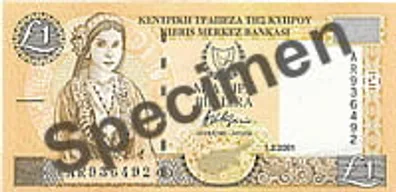
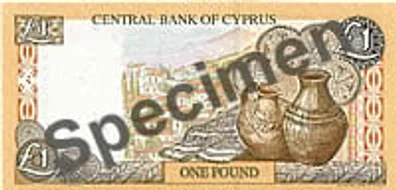
Cyprus’s final pound banknotes belonged to the 1997 series, with denominations of £1, £5, £10, and £20. The £1 note paired a girl in traditional dress with the village of Kato Drys, pottery, and lace.Source: Central Bank of Cyprus, Pictures and descriptions of banknotesOpens in a new tabGo to the list of sourcesSource: Central Bank of Cyprus, CY£1 (series 1997)Opens in a new tabGo to the list of sources
The Republic’s change to the euro
On January 1, 2008, the euro replaced the Cyprus pound as the Republic’s monetary unit. The fixed conversion rate was one euro to 0.585274 Cyprus pounds: 100 pounds became 170.86 euros after rounding to cents.Figures computed by FXtab from:Central Bank of Cyprus, Cyprus poundOpens in a new tabEuropean Central Bank, Cyprus euro changeoverOpens in a new tabThe Metropolitan Museum of Art, Copper ingotOpens in a new taband 2 moreGo to the list of sourcesSource: Central Bank of Cyprus, Cyprus poundOpens in a new tabGo to the list of sourcesSource: European Central Bank, Cyprus euro changeoverOpens in a new tabGo to the list of sources
From mils to the euro
- 1955Mil system1,000 mils to the pound.Figures computed by FXtab from:Central Bank of Cyprus, Cyprus poundOpens in a new tabEuropean Central Bank, Cyprus euro changeoverOpens in a new tabThe Metropolitan Museum of Art, Copper ingotOpens in a new taband 2 moreGo to the list of sourcesSource: Central Bank of Cyprus, Pictures and descriptions of Cyprus pound coinsOpens in a new tabGo to the list of sourcesSource: Central Bank of Cyprus, Cyprus poundOpens in a new tabGo to the list of sources
- October 1983Cent system100 cents to the pound.Figures computed by FXtab from:Central Bank of Cyprus, Cyprus poundOpens in a new tabEuropean Central Bank, Cyprus euro changeoverOpens in a new tabThe Metropolitan Museum of Art, Copper ingotOpens in a new taband 2 moreGo to the list of sourcesSource: Central Bank of Cyprus, Pictures and descriptions of Cyprus pound coinsOpens in a new tabGo to the list of sources
- January 1, 2008Euro€1 = 0.585274 Cyprus pounds.Figures computed by FXtab from:Central Bank of Cyprus, Cyprus poundOpens in a new tabEuropean Central Bank, Cyprus euro changeoverOpens in a new tabThe Metropolitan Museum of Art, Copper ingotOpens in a new taband 2 moreGo to the list of sourcesSource: European Central Bank, Cyprus euro changeoverOpens in a new tabGo to the list of sources
Euro coin starter kits went on sale to the public on December 3, 2007. Accounts converted and euro notes and coins entered circulation on January 1, 2008. Cyprus pound cash remained Money a creditor must accept to settle a debt, subject to applicable exceptions. The European Commission describes this as mandatory acceptance unless the parties agree on another means of payment.Source: Publications Office of the European Union (EUR-Lex), Commission Recommendation 2010/191/EU — ENOpens in a new tab through January 31.Source: European Central Bank, Cyprus euro changeoverOpens in a new tabGo to the list of sources
Exchange of old banknotes continued after their withdrawal from ordinary payments. The Central Bank of Cyprus records that the period for the exchange of Cyprus pound banknotes expired on 31 December 2017.
Source: Central Bank of Cyprus, Cyprus poundOpens in a new tabGo to the list of sources
The ancient coin descriptions are adapted from the Berlin Münzkabinett’s catalog under CC BY-SA 4.0; the adapted descriptions are shared under the same license. Metropolitan Museum of Art object data are paraphrased here. Sources for the Republic’s monetary history: Central Bank of Cyprus and European Central Bank.
Ptolemaic coin type data: American Numismatic Society, Ptolemaic Coins Online, under the Open Database License 1.0. The selected type descriptions are paraphrased here.
The London Gazette, proclamation for the currency of Cyprus dated May 3, 1882, published May 12, 1882, printed p. 2208. Contains public sector information licensed under the Open Government Licence v3.0.
Source: The National Archives (UK), Open Government Licence for public sector information, version 3.0Opens in a new tabGo to the list of sources License. Translations are provided by this site.
Sources
- 1
- 2
- 3
- 4
- 5
- 6
- 7Figures computed by FXtab from:
- Central Bank of Cyprus, Cyprus poundOpens in a new tab
- European Central Bank, Cyprus euro changeoverOpens in a new tab
- The Metropolitan Museum of Art, Copper ingotOpens in a new tab
- Staatliche Museen zu Berlin, Koinon of Cyprus, Claudius, AD 43–44 — Berlin 18238712Opens in a new tab
- Central Bank of Cyprus, The Cyprus Economy – Historical Review, Prospects, Challenges (2012)Opens in a new tab
- 8
- 9
- 10
- 11
- 12
- 13
- 14
- 15
- 16
- 17
- 18
- 19
- 20
- 21
- 22
- 23
- 24
- 25
- 26
- 27
- 28
- 29
- 30
- 31