A history of money in Germany
Why does Germany’s currency history contain so many different marks? The Mark replaced regional currencies after the German Reich was founded in 1871. The Reichsmark followed in 1924; the Deutsche Mark appeared in the western zones in 1948, and the Deutsche Mark der Deutschen Notenbank in the Soviet zone. The western reform converted savings differently from wages. Germany eventually adopted the euro after monetary union had brought the Deutsche Mark to East Germany.Source: Deutsche Bundesbank, Purchasing power comparisons of historical amounts of moneyOpens in a new tabGo to the list of sources Source: Deutsche Bundesbank, Monthly Report — March 2002Opens in a new tabGo to the list of sources Source: Deutsche Bundesbank, The economic and currency reform of 1948: the basis for stable moneyOpens in a new tabGo to the list of sources
Coins before Germany’s national currency
Manching in Bavaria is a possible mint for coins made long before the national currency. A gold coin in the The Deutsche Bundesbank, the independent central bank of Germany since 1957.Source: Deutsche Bundesbank, TimelineOpens in a new tab collection is attributed to the Vindelici of the Alpine foothills. Its catalog gives a tentative date in the second or first century BCE and suggests Manching as its possible mint. These curved gold coins became known as rainbow cups. The volume also records stippled plates (Tüpfelplatten) found at Manching in Bavaria, in which gold dust was melted to make cup-shaped flans, the blanks prepared before striking.Source: Deutsche Bundesbank, MünzprägungOpens in a new tabGo to the list of sourcesSource: Deutsche Bundesbank, Ancient gold coinsOpens in a new tabGo to the list of sources Source: Deutsche Bundesbank, Purchasing power comparisons of historical amounts of moneyOpens in a new tabGo to the list of sources
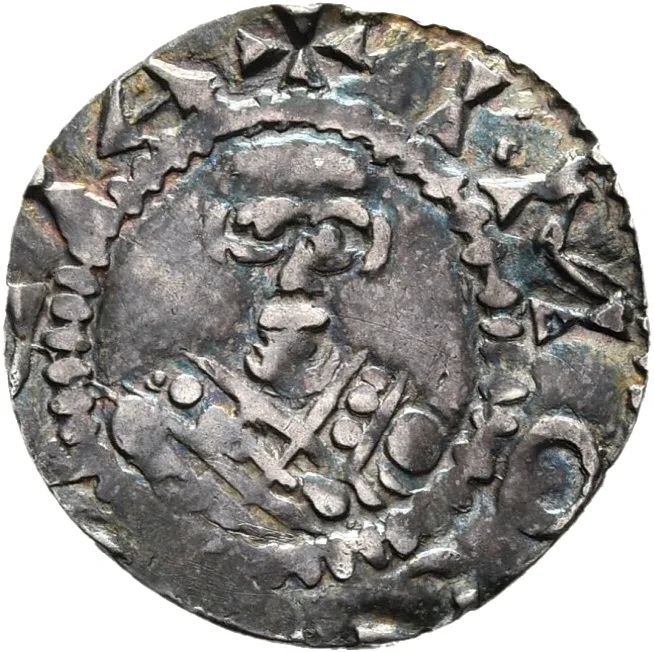
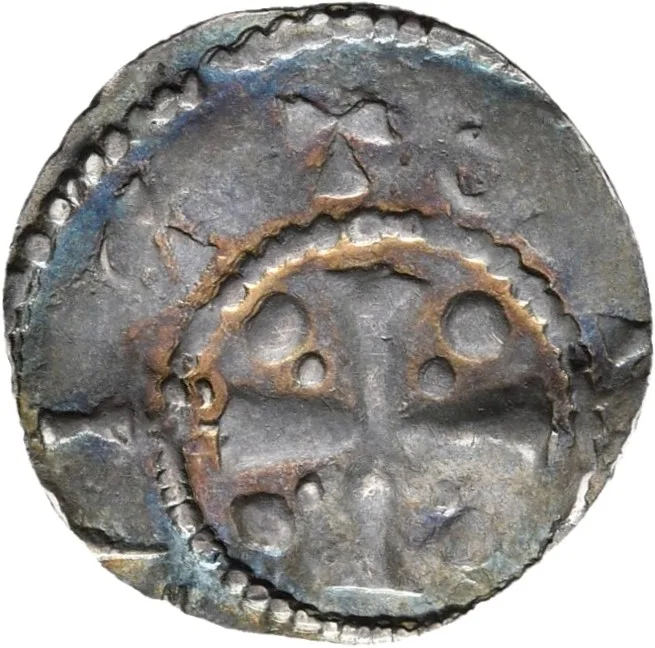
Medieval coins could carry both royal and ecclesiastical authority. A silver coin struck at Mainz in 1000–1002 was issued under Emperor Otto III and Archbishop Willigis. Willigis is shown facing on one side; the other bears a cross and Otto’s imperial title.Source: Staatliche Museen zu Berlin, Mainz: Willigis und Otto III.Opens in a new tabGo to the list of sources
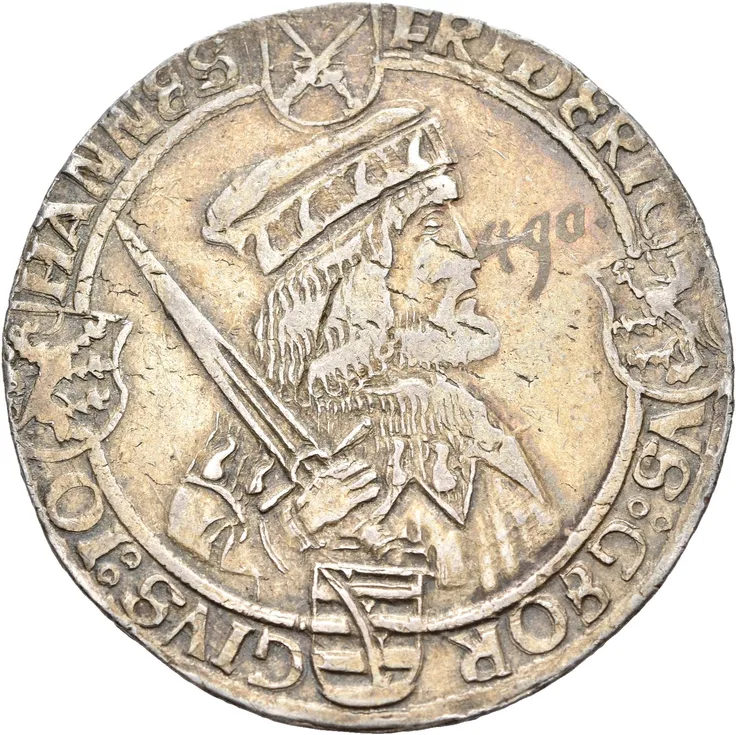
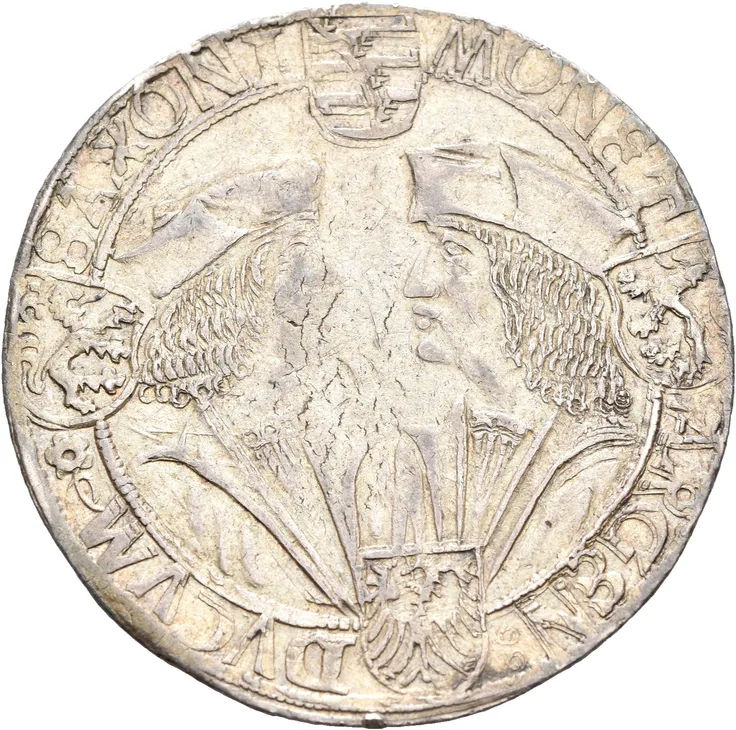
In the early sixteenth century, Saxon rulers were issuing large silver coins from the region’s mining wealth. This coin, dated 1500–1507 and tentatively attributed to Annaberg, shows Frederick III on one side and George and John on the other. Berlin’s museum records its denomination as a thaler.Source: Staatliche Museen zu Berlin, Sachsen: Friedrich III., Georg und Johann der Beständige 1500–1507Opens in a new tabGo to the list of sources
From regional currencies to the Mark
In the German Confederation formed in 1815, most member states used silver currencies. The Prussian thaler and south German florin became the dominant units. Monetary unification followed the founding of the German Reich in 1871. Under the 1873 Coinage Act, a Prussian thaler converted into 3 marks. From January 1876, the Mark was the Reich’s common monetary unit.Figures computed by FXtab from:Deutsche Bundesbank, Purchasing power comparisons of historical amounts of moneyOpens in a new tabDeutsche Bundesbank, The economic and currency reform of 1948: the basis for stable moneyOpens in a new tabDeutsche Bundesbank, Dates of the German monetary policy (detailed version)Opens in a new tabGo to the list of sources Source: Deutsche Bundesbank, Purchasing power comparisons of historical amounts of moneyOpens in a new tabGo to the list of sources
The Mark had a fixed relationship to gold. On July 31, 1914, the Reichsbank stopped exchanging banknotes for gold.Source: Deutsche Bundesbank, Purchasing power comparisons of historical amounts of moneyOpens in a new tabGo to the list of sources
War borrowing and the inflation of 1923
After war broke out in 1914, Germany financed its costs through borrowing from the population and increasingly from the Reichsbank, which issued more banknotes. After the war, domestic debt, social spending, and reparation payments added to the government’s financial demands. Government borrowing continued, while the supply of goods failed to keep pace with the money entering circulation.Source: Deutsche Bundesbank, Inflation – lessons learnt from historyOpens in a new tabGo to the list of sources
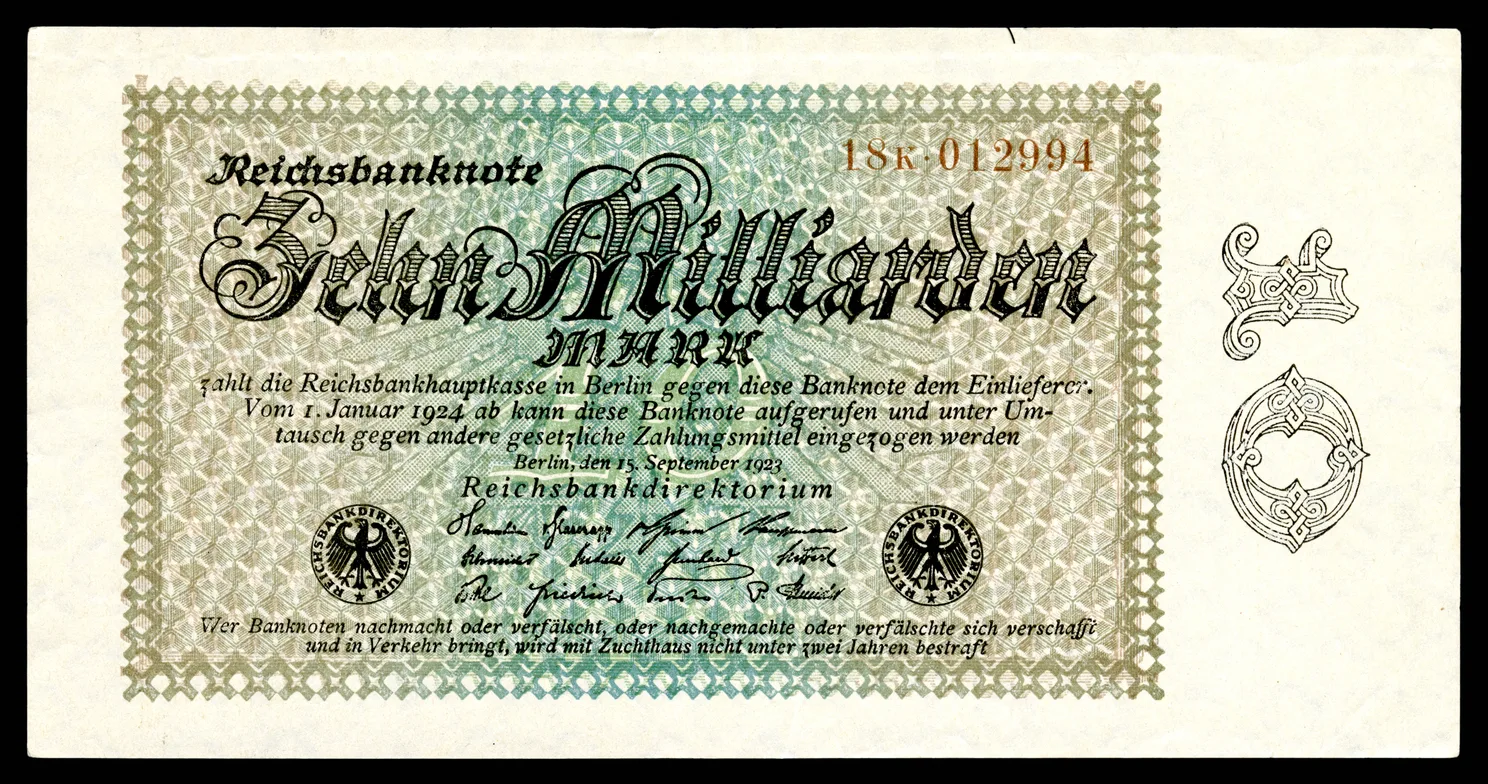
During the An extreme form of inflation in which prices rise rapidly.Source: Deutsche Bundesbank, GlossaryOpens in a new tab of 1923, wages were paid daily in many places. People hurried to spend their earnings before prices rose again; some sellers demanded food or coal in exchange.Source: Deutsche Bundesbank, Inflation – lessons learnt from historyOpens in a new tabGo to the list of sources
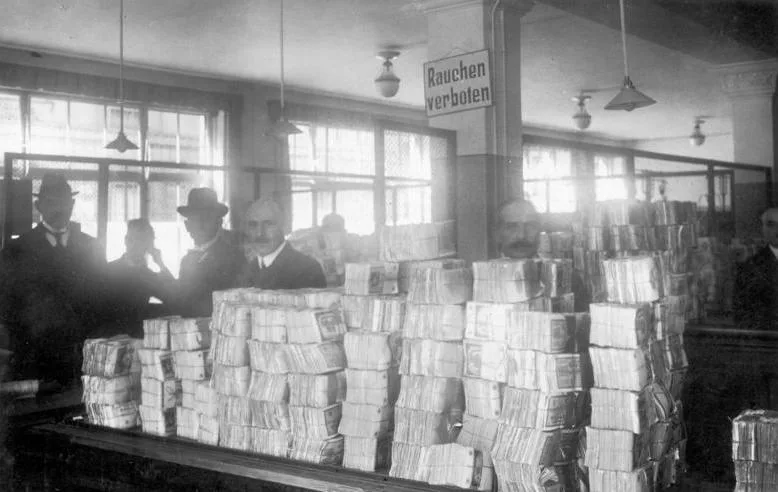
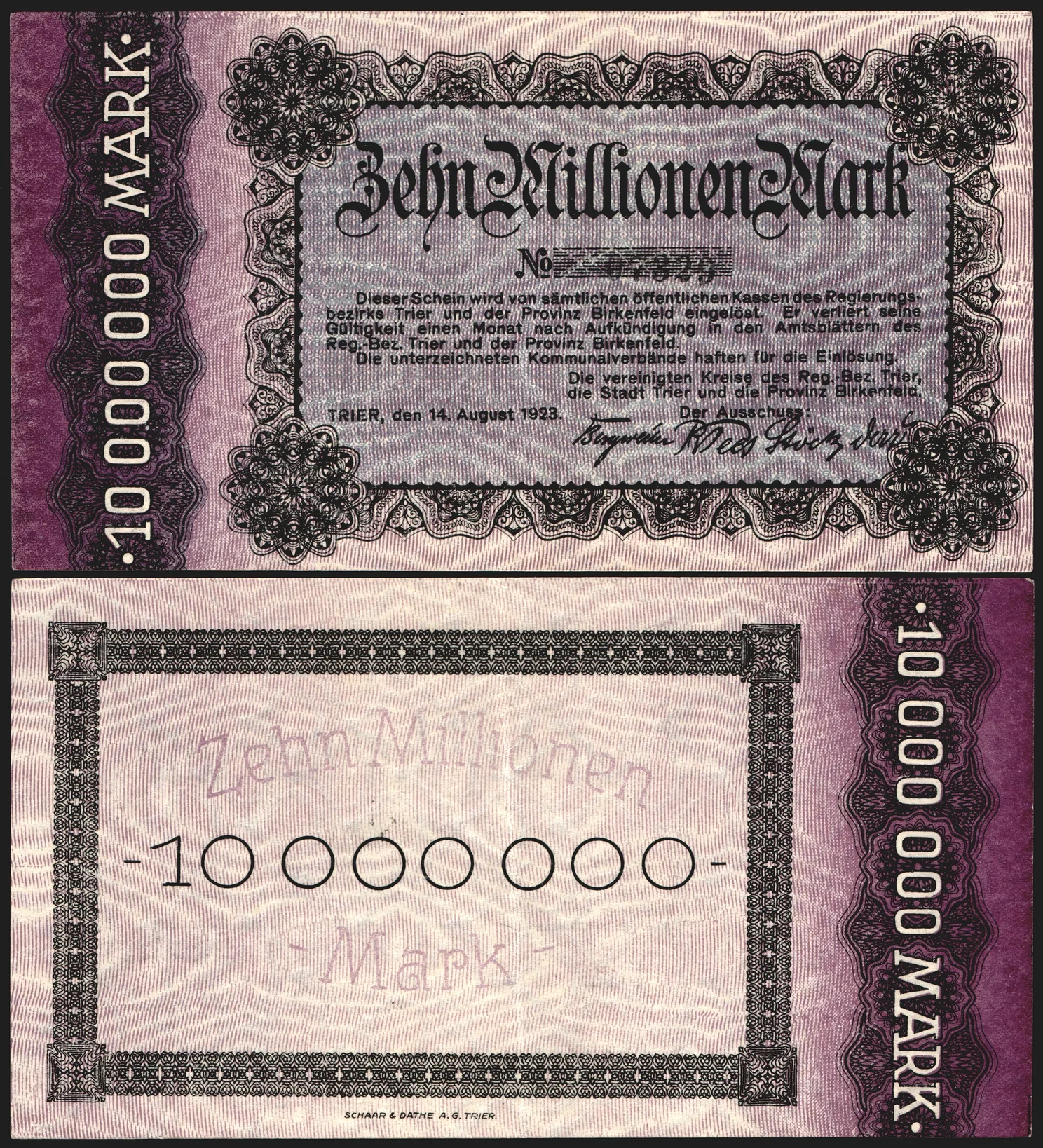
Cash also came from local authorities and businesses. During the inflation, the Reichsbank could not print notes quickly enough, and towns, municipalities, and companies produced emergency money. Some issues had the Reichsbank’s permission; others did not.Source: Deutsche Bundesbank, 5. Der Wert stabilen GeldesOpens in a new tabGo to the list of sources
The Rentenmark and the Reichsmark
The government introduced the Rentenmark in November 1923. Its issue was limited, and tighter monetary and budget policies supported stabilization. The new Reichsmark followed in 1924, replacing the old Mark as the official unit at 1,000,000,000,000 marks to one Reichsmark.Figures computed by FXtab from:Deutsche Bundesbank, Purchasing power comparisons of historical amounts of moneyOpens in a new tabDeutsche Bundesbank, The economic and currency reform of 1948: the basis for stable moneyOpens in a new tabDeutsche Bundesbank, Dates of the German monetary policy (detailed version)Opens in a new tabGo to the list of sources Source: Deutsche Bundesbank, 5. Der Wert stabilen GeldesOpens in a new tabGo to the list of sources Source: Deutsche Bundesbank, Purchasing power comparisons of historical amounts of moneyOpens in a new tabGo to the list of sources
Germany financed the Second World War by borrowing from the central bank. This borrowing accompanied a major expansion of the money supply, while price freezes, wage controls, and rationing kept inflation hidden. Official prices did not correspond to the actual prices of goods and services. Many goods were unavailable at those prices, and black-market prices differed sharply.Source: Deutsche Bundesbank, Inflation – lessons learnt from historyOpens in a new tabGo to the list of sources Source: Deutsche Bundesbank, Purchasing power comparisons of historical amounts of moneyOpens in a new tabGo to the list of sources
1948: different rules for wages and savings
In June 1948, the western occupying powers introduced the Deutsche Mark in their zones. Distribution began on June 20, and the new currency became the sole Money a creditor must accept to settle a debt, subject to applicable exceptions. The European Commission describes this as mandatory acceptance unless the parties agree on another means of payment.Source: Publications Office of the European Union (EUR-Lex), Commission Recommendation 2010/191/EU — ENOpens in a new tab the following day. Each citizen of the western zones received an initial 40 Deutsche Marks, followed by 20 more, against the same total amount in Reichsmarks.Figures computed by FXtab from:Deutsche Bundesbank, Purchasing power comparisons of historical amounts of moneyOpens in a new tabDeutsche Bundesbank, The economic and currency reform of 1948: the basis for stable moneyOpens in a new tabDeutsche Bundesbank, Dates of the German monetary policy (detailed version)Opens in a new tabGo to the list of sources Source: Deutsche Bundesbank, The economic and currency reform of 1948: the basis for stable moneyOpens in a new tabGo to the list of sources
Wages, salaries, and rents converted one for one. Savings faced a much larger reduction: the Bundesbank’s chronology gives a conversion of 100 Reichsmarks into 6.5 Deutsche Marks for major cash holdings and bank balances. Wages and savings were therefore converted at different rates.Figures computed by FXtab from:Deutsche Bundesbank, Purchasing power comparisons of historical amounts of moneyOpens in a new tabDeutsche Bundesbank, The economic and currency reform of 1948: the basis for stable moneyOpens in a new tabDeutsche Bundesbank, Dates of the German monetary policy (detailed version)Opens in a new tabGo to the list of sources Source: Deutsche Bundesbank, The economic and currency reform of 1948: the basis for stable moneyOpens in a new tabGo to the list of sources Source: Deutsche Bundesbank, Dates of the German monetary policy (detailed version)Opens in a new tabGo to the list of sources
The Soviet occupation zone began issuing its own new currency in June 1948. It was named Deutsche Mark der Deutschen Notenbank, later changing to Mark der Deutschen Notenbank and then Mark der Deutschen Demokratischen Republik. West Berlin and the Saarland followed separate paths: the western Deutsche Mark became West Berlin’s sole legal tender in 1949 and legal tender in the Saarland in 1959.Source: Deutsche Bundesbank, Monthly Report — March 2002Opens in a new tabGo to the list of sources
The western Deutsche Mark
The western zones’ central bank, the Bank deutscher Länder, was established in 1948. In 1957, the Bundesbank replaced it. The new central bank’s mandate included safeguarding the currency, and it was independent of government instructions.Source: Deutsche Bundesbank, Dates of the German monetary policy (detailed version)Opens in a new tabGo to the list of sources
Under the The system of fixed exchange rates agreed at Bretton Woods, New Hampshire, in 1944, with the US dollar as its anchor currency.Source: Deutsche Bundesbank, 1973: The end of Bretton Woods When exchange rates learned to floatOpens in a new tab, the Deutsche Mark had a fixed but adjustable exchange rate against the dollar. In 1971, the dollar came under pressure, and the Bundesbank intervened to support it. The Bundesbank’s account of 1973 describes the result: The Bundesbank was permitted to stop buying US dollars.
Source: Deutsche Bundesbank, 1973: The end of Bretton Woods When exchange rates learned to floatOpens in a new tabGo to the list of sources The mark could then move against the dollar. A central bank agreement on the European Monetary System followed in 1979, providing fixed but adjustable exchange rates and limited mutual obligations to intervene.Source: Deutsche Bundesbank, Dates of the German monetary policy (detailed version)Opens in a new tabGo to the list of sourcesSource: Deutsche Bundesbank, 1973: The end of Bretton Woods When exchange rates learned to floatOpens in a new tabGo to the list of sources
Monetary union before political unification
On July 1, 1990, the Deutsche Mark became legal tender in East Germany, before political unification. Wages and salaries converted one for one. Assets generally converted at two East German marks to one Deutsche Mark, with limited savings allowances exchanged one for one according to the saver’s age.Source: Deutsche Bundesbank, Monthly Report — March 2002Opens in a new tabGo to the list of sources
East German cash had to be deposited in bank accounts by July 6, 1990; the conversion took place through those accounts. Deutsche Mark cash was paid out from July 1, 1990. Because the mints could not supply all the coins needed, East German pfennig coins remained legal tender until July 1991.Source: Deutsche Bundesbank, Monthly Report — March 2002Opens in a new tabGo to the list of sources
From the Deutsche Mark to the euro
Germany joined the euro at its launch in January 1999; euro cash followed in January 2002. The fixed conversion rate was €1 = 1.95583 Deutsche Marks. At that rate, an illustrative 100 Deutsche Marks converts to €51.13. This exchanges monetary units; it does not measure the goods the earlier amount could buy.Figures computed by FXtab from:Deutsche Bundesbank, Purchasing power comparisons of historical amounts of moneyOpens in a new tabDeutsche Bundesbank, The economic and currency reform of 1948: the basis for stable moneyOpens in a new tabDeutsche Bundesbank, Dates of the German monetary policy (detailed version)Opens in a new tabGo to the list of sources Source: Deutsche Bundesbank, Purchasing power comparisons of historical amounts of moneyOpens in a new tabGo to the list of sources
- 1876Mark.A common monetary unit for the German Reich.Source: Deutsche Bundesbank, Purchasing power comparisons of historical amounts of moneyOpens in a new tabGo to the list of sources
- 1923–1924Rentenmark and Reichsmark.Stabilization after hyperinflation, followed by a new official unit.Source: Deutsche Bundesbank, Inflation – lessons learnt from historyOpens in a new tabGo to the list of sources Source: Deutsche Bundesbank, Purchasing power comparisons of historical amounts of moneyOpens in a new tabGo to the list of sources
- 1948Separate currenciesThe western and Soviet occupation zones introduce different marks.Source: Deutsche Bundesbank, Monthly Report — March 2002Opens in a new tabGo to the list of sources
- 1990Monetary unionThe Deutsche Mark becomes East Germany’s currency.Source: Deutsche Bundesbank, Monthly Report — March 2002Opens in a new tabGo to the list of sources
- 1999–2002EuroThe euro starts in accounts, then arrives as notes and coins.Source: Deutsche Bundesbank, Purchasing power comparisons of historical amounts of moneyOpens in a new tabGo to the list of sources
What was a mark worth?
Historical prices give a different answer from a currency conversion. In the Bundesbank’s food-price comparison, a kilogram of rye bread cost 0.26 marks in 1882, while a kilogram of wheat flour cost 0.45 marks. Comparing those goods with their later prices produces different estimates of purchasing power. Household spending patterns and product quality also change over time.Figures computed by FXtab from:Deutsche Bundesbank, Purchasing power comparisons of historical amounts of moneyOpens in a new tabDeutsche Bundesbank, The economic and currency reform of 1948: the basis for stable moneyOpens in a new tabDeutsche Bundesbank, Dates of the German monetary policy (detailed version)Opens in a new tabGo to the list of sources Source: Deutsche Bundesbank, Purchasing power comparisons of historical amounts of moneyOpens in a new tabGo to the list of sources
For surviving cash, the issuer and period determine whether official exchange remains possible. As of this article’s date, the Bundesbank exchanges eligible Deutsche Mark notes and coins indefinitely. Notes and coins issued before June 20, 1948, and those of the former Soviet zone and East Germany, can no longer be exchanged.Source: Deutsche Bundesbank, Frequently asked questions about DM banknotesOpens in a new tabGo to the list of sources
Sources
Source: Deutsche Bundesbank; museum object records and photograph credits are identified beside the relevant passages and figures. FXtab’s calculations use the archived sources listed above.