A history of money in Greece
How did the modern drachma give way to the euro? Greece adopted the euro in 2001. Earlier coins came from cities such as Aegina and Athens, each with its own money.Source: European Central Bank, Greece becomes the 12th Member State to adopt the euroOpens in a new tabGo to the list of sourcesSource: Staatliche Museen zu Berlin, Aegina silver stater, c. 550–500 BCE, Berlin 18202663Opens in a new tabGo to the list of sourcesSource: Deutsche Bundesbank, Ancient gold coinsOpens in a new tabGo to the list of sources
Aegina and Athens
A silver stater of Aegina in Berlin’s Münzkabinett carries a turtle and is dated about 550–500 BCE. According to the museum, it weighs 12.37 grams and measures 18–21 millimeters across. The stater was the unit of weight in Aegina’s coinage.Figures computed by FXtab from:European Central Bank, Greece: drachma exchange and denominationsOpens in a new tabBank for International Settlements, Nicholas C. Garganas: Why is the role of the central bank important? (speech, 3 November 2003; BIS file relocated)Opens in a new tabStaatliche Museen zu Berlin, Aegina silver stater, c. 550–500 BCE, Berlin 18202663Opens in a new taband 4 moreGo to the list of sourcesSource: Staatliche Museen zu Berlin, Aegina silver stater, c. 550–500 BCE, Berlin 18202663Opens in a new tabGo to the list of sources
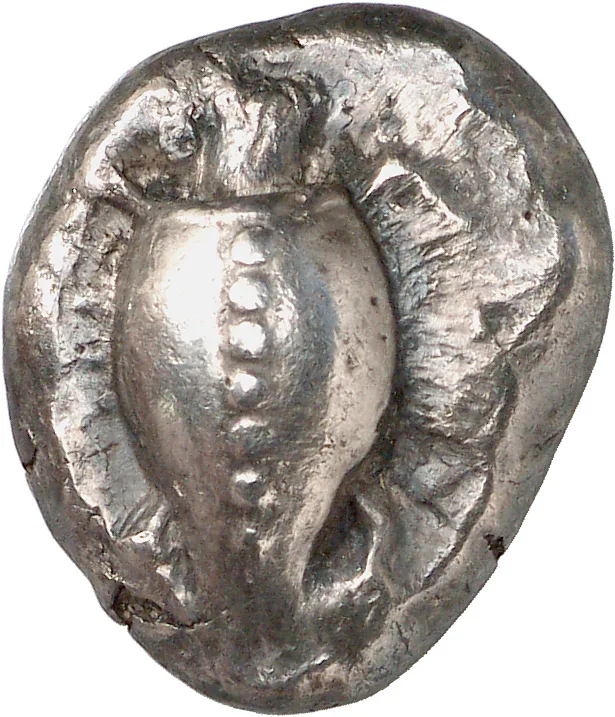
The museum describes the Aeginetan stater as averaging about 12.2 grams. Aegina’s weight standard was also used in the Peloponnese, central Greece, and Aegean islands.Figures computed by FXtab from:European Central Bank, Greece: drachma exchange and denominationsOpens in a new tabBank for International Settlements, Nicholas C. Garganas: Why is the role of the central bank important? (speech, 3 November 2003; BIS file relocated)Opens in a new tabStaatliche Museen zu Berlin, Aegina silver stater, c. 550–500 BCE, Berlin 18202663Opens in a new taband 4 moreGo to the list of sourcesSource: Staatliche Museen zu Berlin, Aegina silver stater, c. 550–500 BCE, Berlin 18202663Opens in a new tabGo to the list of sources
In fifth-century BCE Athens, the tetradrachm was the principal silver denomination. Smaller silver pieces supplied change. Athenian owl coins circulated far beyond the Greek world: examples have been found along the ancient caravan route to India in present-day Afghanistan. Philip II of Macedon used the Attic standard for his gold coins; Alexander the Great used it for silver too.Source: Deutsche Bundesbank, Ancient gold coinsOpens in a new tabGo to the list of sources
Coins bearing Alexander’s name continued to be struck after his death. His name on a coin therefore does not, by itself, place its minting within his reign. Head’s 1911 manual (p. 227) notes that silver coins bearing Alexander’s name were struck in some parts of the ancient world after his death, and describes the difficulty of assigning them to periods and mints.Source: Oxford Clarendon Press, Historia Numorum (1911), Barclay V. Head, Historia Numorum: A Manual of Greek Numismatics, new and enlarged edition (1911)Opens in a new tabGo to the list of sources
Coins from Athens and Thessalonica
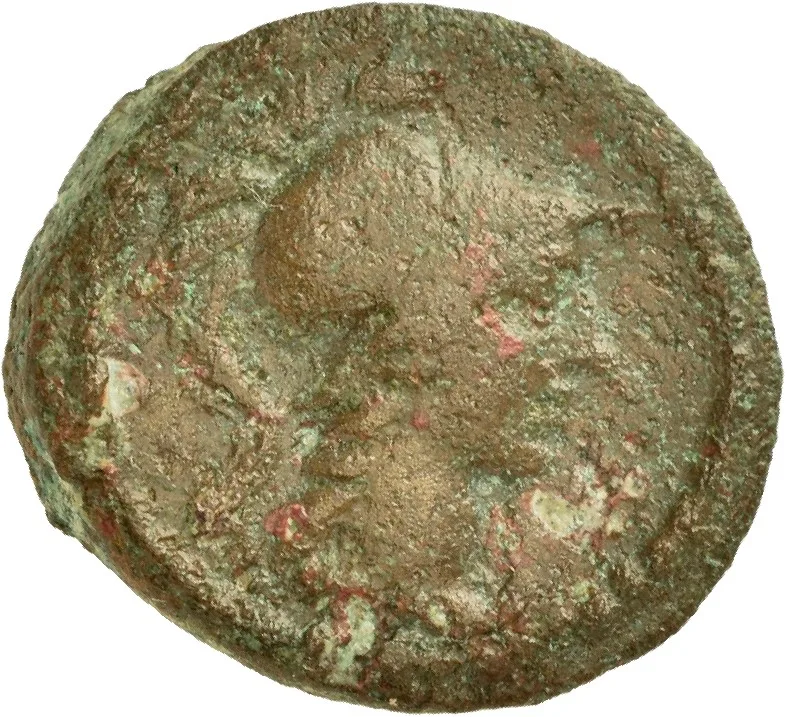
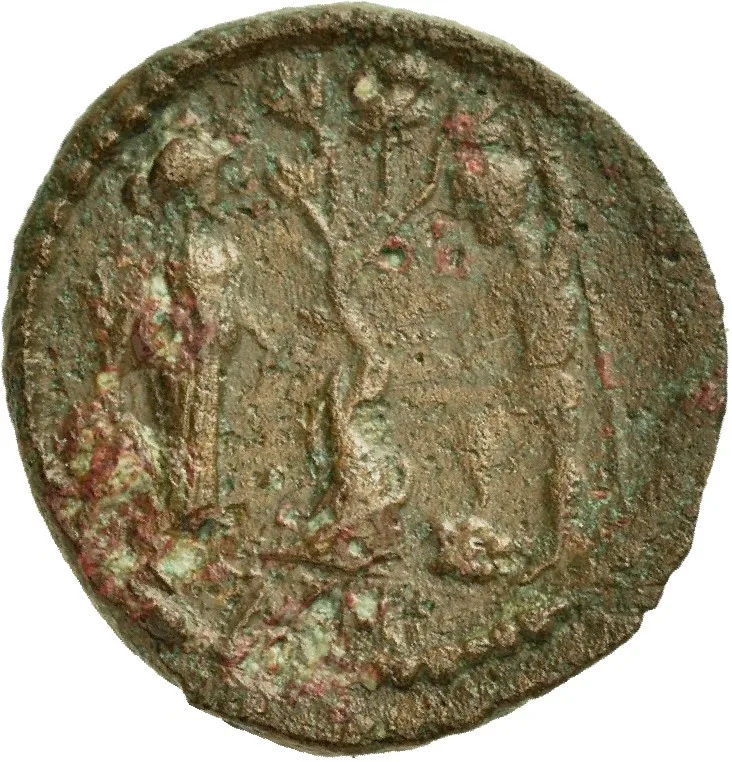
Berlin’s Münzkabinett assigns a bronze coin to the Athens mint about 264–267 CE. Athena appears on one face; on the other, she stands opposite Poseidon beside an olive tree. The British Museum’s catalog (pp. 11, 17) records bronze coins bearing the portrait of the Byzantine emperor Justin I (518–527) and the Thessalonica mint name THESSOB.Source: Staatliche Museen zu Berlin, Athens bronze coin, about 264–267 CE, Berlin 18322827Opens in a new tabGo to the list of sourcesSource: British Museum, Warwick Wroth Byzantine coin catalog (1908), Warwick Wroth, Catalogue of the Imperial Byzantine Coins in the British Museum, vol. I (1908)Opens in a new tabGo to the list of sources
Coins in medieval Athens and Chios
The National Museum of American History catalogs a silver coin made in Athens in 1287–1308. Its collection also includes a gold coin from Chios dated 1415. These surviving objects identify different coins and issuing places in the medieval Greek lands.Source: Smithsonian Open Access, 1 Denier Tournois, Athens, Greece, 1287-1308Opens in a new tabGo to the list of sourcesSource: Smithsonian Open Access, 1 Ducat, Chios, Greece, 1415Opens in a new tabGo to the list of sources
Schlumberger’s 1878 book (p. 309) describes coins of the same type as those of France. He also reproduces Marino Sanudo’s account of Louis IX allowing William of Achaea to strike tournois to the king’s alloy standard: three and a half ounces of silver in a pound. The comparison of coin types is Schlumberger’s; the alloy specification comes from Sanudo.Source: Gustave Schlumberger, Numismatique de l’Orient latin (1878), Gustave Schlumberger, Numismatique de l’Orient latin (1878)Opens in a new tabGo to the list of sources
The Ottoman mint named Serez
Lane-Poole’s 1883 British Museum catalog lists silver coins under the mint name Serez. On printed p. 50, entries 102 and 102a bear the years 822 and 816.Source: British Museum, Catalogue of Oriental Coins, vol. VIII (1883), Stanley Lane-Poole, Catalogue of Oriental Coins in the British Museum, vol. VIII: Ottoman sultans (1883)Opens in a new tabGo to the list of sources
From the phoenix to the drachma
A currency order dated February 8, 1828 in the Julian calendar set values for coins used in transactions, to be reckoned throughout Greece. The schedule included pounds sterling, francs and other coins. Its purpose was to address differences in how those coins were valued from place to place. Issue 11 is dated Saturday, February 11, consistent with the Julian calendar.Figures computed by FXtab from:European Central Bank, Greece: drachma exchange and denominationsOpens in a new tabBank for International Settlements, Nicholas C. Garganas: Why is the role of the central bank important? (speech, 3 November 2003; BIS file relocated)Opens in a new tabStaatliche Museen zu Berlin, Aegina silver stater, c. 550–500 BCE, Berlin 18202663Opens in a new taband 4 moreGo to the list of sourcesSource: Library of the Hellenic Parliament, historic official acts, Γενική Εφημερίς της Ελλάδος, 11 February 1828, issue 11, currency order no. 207Opens in a new tabGo to the list of sources
A resolution of the Fourth National Assembly, dated July 31, 1829 in the Julian calendar and printed in the General Newspaper of Greece that August, approved the symbols, inscriptions, metal, and value of national coins. It approved the phoenix with olive and laurel branches, alongside inscriptions for the Greek State and Governor Kapodistrias. The resolution directed the government to put the coins into circulation.Figures computed by FXtab from:European Central Bank, Greece: drachma exchange and denominationsOpens in a new tabBank for International Settlements, Nicholas C. Garganas: Why is the role of the central bank important? (speech, 3 November 2003; BIS file relocated)Opens in a new tabStaatliche Museen zu Berlin, Aegina silver stater, c. 550–500 BCE, Berlin 18202663Opens in a new taband 4 moreGo to the list of sourcesSource: Library of the Hellenic Parliament, historic official acts, Γενική Εφημερίς της Ελλάδος, 14 August 1829, issue 55, resolution Ζ΄ of the Fourth National AssemblyOpens in a new tabGo to the list of sources
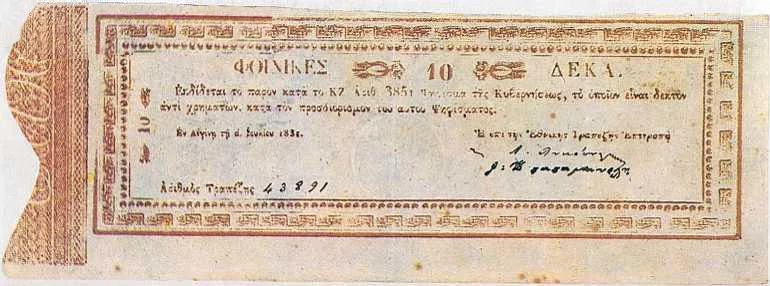
Paper money denominated in phoenix was issued in 1831.Source: bavarikon / HypoVereinsbank Banknoten-Sammlung, Griechenland, National Bank of Greece: 5 Drachmen 1897Opens in a new tabGo to the list of sources
The Government Gazette dated February 22, 1833, in the Julian calendar (March 6 in the Gregorian calendar) printed a decree replacing the phoenix as the coinage unit with the drachma. It divided the drachma into 100 lepta and specified a silver coin made of nine parts silver to one part copper. Article 16 temporarily accepted specified foreign coins at national treasuries. Article 17 valued old phoenix coins at 93 lepta each; article 18 accepted Greek copper coins at four new lepta for five old lepta.Figures computed by FXtab from:European Central Bank, Greece: drachma exchange and denominationsOpens in a new tabBank for International Settlements, Nicholas C. Garganas: Why is the role of the central bank important? (speech, 3 November 2003; BIS file relocated)Opens in a new tabStaatliche Museen zu Berlin, Aegina silver stater, c. 550–500 BCE, Berlin 18202663Opens in a new taband 4 moreGo to the list of sourcesSource: Greek Government Gazette, Εφημερίς της Κυβερνήσεως A 2 (22 February 1833), Περί δραχμήςOpens in a new tabGo to the list of sourcesSource: Greek Government Gazette, Εφημερίς της Κυβερνήσεως A 21 (12 April 1867), Νόμος ΣΔ΄ περί νομισματικού συστήματοςOpens in a new tabGo to the list of sources
A law published in 1841 (articles 1–3) established a National Bank in the capital as a A company whose share capital is divided into shares, each a shareholder’s stake.Source: Deutsche Bundesbank, GlossaryOpens in a new tab. Its initial capital was five million drachmas, divided into five thousand shares of one thousand drachmas each.Source: Greek Government Gazette, Εφημερίς της Κυβερνήσεως A 6 (30 March 1841), Νόμος περί συστάσεως Εθνικής ΤραπέζηςOpens in a new tabGo to the list of sources
Writing in 1913, Percy F. Martin dated the bank’s first note issues to August 1841 (p. 134). He recorded gradual increases in its capital from five million drachmas to twenty million by 1885.Source: Martin historical works, Percy F. Martin, Greece of the Twentieth Century (1913)Opens in a new tabGo to the list of sources
A monetary law published in 1867 (articles 1–2) specified a new five-gram silver drachma, nine-tenths pure, and set one part gold equal in value to 15½ parts silver. A November 1868 law (sole article) delayed that system’s start from January 1869 to January 1870. A law published on December 9, 1868 (articles 1–2) ratified the 1865 monetary convention of Belgium, France, Italy, and Switzerland, which Greece had joined by declaration. It set January 1, 1872 as the deadline, under article 5 of the convention, for withdrawing Greek gold and silver coins struck up to that time.Source: Greek Government Gazette, Εφημερίς της Κυβερνήσεως A 21 (12 April 1867), Νόμος ΣΔ΄ περί νομισματικού συστήματοςOpens in a new tabGo to the list of sourcesSource: Greek Government Gazette, Εφημερίς της Κυβερνήσεως A 56 (26 November 1868), Νόμος ΣϞϚ΄ περί αναστολής εφαρμογήςOpens in a new tabGo to the list of sourcesSource: Greek Government Gazette, Εφημερίς της Κυβερνήσεως A 57 (9 December 1868), Νόμος ΣΠ΄ περί νομισματικής συμβάσεωςOpens in a new tabGo to the list of sourcesSource: Banque centrale du Luxembourg, Banque centrale du Luxembourg - Monetary historyOpens in a new tabGo to the list of sources
Borrowing and debt payments
The state also borrowed abroad. Andreades’s 1904 history records a nominal £800,000 for the first independence loan, issued at 59 percent of that value, with interest of five percent. His account distinguishes the debt’s stated amount from the proceeds of its issue (pp. 17–18).Source: Andreades historical works, Ανδρέας Ανδρεάδης, Ιστορία των Εθνικών Δανείων (1904)Opens in a new tabGo to the list of sources
By Martin’s 1913 account, an international commission controlled specified revenues assigned to foreign debt payments. They included receipts from salt, petroleum, matches, and other monopolies, stamp and tobacco duties, and Piraeus customs. He gives the commission’s starting date as April 28 (May 10), 1898 (p. 114). This article identifies those dates as Julian and Gregorian, respectively.Figures computed by FXtab from:European Central Bank, Greece: drachma exchange and denominationsOpens in a new tabBank for International Settlements, Nicholas C. Garganas: Why is the role of the central bank important? (speech, 3 November 2003; BIS file relocated)Opens in a new tabStaatliche Museen zu Berlin, Aegina silver stater, c. 550–500 BCE, Berlin 18202663Opens in a new taband 4 moreGo to the list of sourcesSource: Martin historical works, Percy F. Martin, Greece of the Twentieth Century (1913)Opens in a new tabGo to the list of sources
A central bank and a currency crisis
The Greece’s central bank. It began operations in May 1928 with the tasks of ensuring a stable currency and regulating currency circulation.Source: Bank for International Settlements, Nicholas C. Garganas: Why is the role of the central bank important? (speech, 3 November 2003; BIS file relocated)Opens in a new tab opened in May 1928 with exclusive banknote-issue rights. Greece left the gold standard in April 1932 under pressure from drachma sales.Source: Bank for International Settlements, Nicholas C. Garganas: Why is the role of the central bank important? (speech, 3 November 2003; BIS file relocated)Opens in a new tabGo to the list of sources
Occupation and the postwar drachma
The Axis powers made occupied Greece pay for the upkeep of their troops and their military operations in Southeastern Europe. The puppet regime established by the occupiers forced the Bank of Greece to print money. During the resulting An extreme form of inflation in which prices rise rapidly.Source: Deutsche Bundesbank, GlossaryOpens in a new tab, the cost of living rose 2.3 billionfold from April 1941 to October 1944. In November 1944, one new drachma replaced 50,000,000,000 old ones.Figures computed by FXtab from:European Central Bank, Greece: drachma exchange and denominationsOpens in a new tabBank for International Settlements, Nicholas C. Garganas: Why is the role of the central bank important? (speech, 3 November 2003; BIS file relocated)Opens in a new tabStaatliche Museen zu Berlin, Aegina silver stater, c. 550–500 BCE, Berlin 18202663Opens in a new taband 4 moreGo to the list of sourcesSource: Bank for International Settlements, Nicholas C. Garganas: Why is the role of the central bank important? (speech, 3 November 2003; BIS file relocated)Opens in a new tabGo to the list of sources
The Currency Committee, formed in March 1946, controlled money issuance and directed credit and exchange-rate policy.Source: Bank for International Settlements, Nicholas C. Garganas: Why is the role of the central bank important? (speech, 3 November 2003; BIS file relocated)Opens in a new tabGo to the list of sources
In April 1953 the drachma was devalued by 50% against the dollar and joined the The system of fixed exchange rates agreed at Bretton Woods, New Hampshire, in 1944, with the US dollar as its anchor currency.Source: Deutsche Bundesbank, 1973: The end of Bretton Woods When exchange rates learned to floatOpens in a new tab. In 1954, 1,000 old drachmas became one new drachma. Garganas credits the new drachma, together with the Bretton Woods nominal anchor and tighter fiscal policy, with reducing inflation expectations.Figures computed by FXtab from:European Central Bank, Greece: drachma exchange and denominationsOpens in a new tabBank for International Settlements, Nicholas C. Garganas: Why is the role of the central bank important? (speech, 3 November 2003; BIS file relocated)Opens in a new tabStaatliche Museen zu Berlin, Aegina silver stater, c. 550–500 BCE, Berlin 18202663Opens in a new taband 4 moreGo to the list of sourcesSource: Bank for International Settlements, Nicholas C. Garganas: Why is the role of the central bank important? (speech, 3 November 2003; BIS file relocated)Opens in a new tabGo to the list of sources
The Currency Committee was abolished in 1982, and its duties passed to the Bank of Greece. Monetary financing of the fiscal deficit ended in 1994. A 1997 law made the Bank independent and gave it a mandate for price stability.Source: Bank for International Settlements, Nicholas C. Garganas: Why is the role of the central bank important? (speech, 3 November 2003; BIS file relocated)Opens in a new tabGo to the list of sources
Preparing for the euro
In the mid-1990s, the Bank of Greece used the exchange rate as a nominal anchor to reduce inflation, supported by high real interest rates.Source: Bank for International Settlements, Nicholas C. Garganas: Why is the role of the central bank important? (speech, 3 November 2003; BIS file relocated)Opens in a new tabGo to the list of sources
The drachma entered the The European system that linked participating currencies through central rates against the ECU, the European unit of account.Source: European Parliament, Fact Sheets on the European Union: History of the economic and monetary unionOpens in a new tab in March 1998 at a central rate that devalued it against the The European Currency Unit, an accounting unit made from a basket of European currencies. It preceded the euro.Source: Central Bank of Cyprus, The Cyprus Economy – Historical Review, Prospects, Challenges (2012)Opens in a new tab.Source: Bank for International Settlements, Nicholas C Garganas: Exchange-rate regimes on the road to EMU: lessons from Greece’s experienceOpens in a new tabGo to the list of sources
In a February 2000 address, Deputy Governor Garganas attributed lower inflation to high short-term interest rates, a strong drachma, and tight fiscal policy. He also noted slower growth in unit labor costs during Greece’s preparation to join the euro area.Source: Bank for International Settlements, Nicholas C Garganas: Challenges for Greek monetary policy on the eve of euro-zone entryOpens in a new tabGo to the list of sources
The euro cash changeover
Greece adopted the euro on January 1, 2001. The The European Central Bank, the central bank of the euro area. Its main task is to maintain price stability.Source: European Central Bank, All about usOpens in a new tab’s announcement on the following day records the Bank of Greece joining the The European Central Bank and the national central banks of EU countries that use the euro. Together they conduct monetary policy for the euro area.Source: Deutsche Bundesbank, GlossaryOpens in a new tab and the integration of Greek monetary financial institutions into the euro area banking system. Euro banknotes and coins were introduced on January 1, 2002, a year after adoption.Source: European Central Bank, Greece becomes the 12th Member State to adopt the euroOpens in a new tabGo to the list of sourcesSource: European Central Bank, The euro cash changeover in 2002Opens in a new tabGo to the list of sources
From the postwar reforms to euro cash
- 1953–1954Devaluation and a new unitDevaluation and a dollar link, followed by a new drachma unit.Source: Bank for International Settlements, Nicholas C. Garganas: Why is the role of the central bank important? (speech, 3 November 2003; BIS file relocated)Opens in a new tabGo to the list of sources
- March 1998Exchange Rate MechanismThe drachma entered the Exchange Rate Mechanism.Source: Bank for International Settlements, Nicholas C Garganas: Exchange-rate regimes on the road to EMU: lessons from Greece’s experienceOpens in a new tabGo to the list of sources
- January 1, 2001Euro adoptedGreece joined the euro area.Source: European Central Bank, Greece becomes the 12th Member State to adopt the euroOpens in a new tabGo to the list of sources
- January 1, 2002Euro cash introducedEuro banknotes and coins entered circulation.Source: European Central Bank, The euro cash changeover in 2002Opens in a new tabGo to the list of sources
The fixed conversion rate was one euro to 340.750 drachmas. For example, dividing 100,000 drachmas by that rate gives 293.47 euros after rounding to cents.Figures computed by FXtab from:European Central Bank, Greece: drachma exchange and denominationsOpens in a new tabBank for International Settlements, Nicholas C. Garganas: Why is the role of the central bank important? (speech, 3 November 2003; BIS file relocated)Opens in a new tabStaatliche Museen zu Berlin, Aegina silver stater, c. 550–500 BCE, Berlin 18202663Opens in a new taband 4 moreGo to the list of sourcesSource: European Central Bank, Greece: drachma exchange and denominationsOpens in a new tabGo to the list of sources
The European Central Bank states: Greek drachmas banknotes cannot be exchanged after 1 March 2012.
Source: European Central Bank, Greece: drachma exchange and denominationsOpens in a new tabGo to the list of sources
The Bank for International Settlements publishes the cited speeches. Source: Deutsche Bundesbank for the account of ancient Greek coins. The descriptions of the Aegina stater and the Athens bronze coin are adapted from the Berlin Münzkabinett’s catalog under CC BY-SA 4.0; that adaptation is shared under the same license.Source: BIS, Terms and conditionsOpens in a new tabGo to the list of sourcesSource: Deutsche Bundesbank, Ancient gold coinsOpens in a new tabGo to the list of sourcesSource: Staatliche Museen zu Berlin, Aegina silver stater, c. 550–500 BCE, Berlin 18202663Opens in a new tabGo to the list of sourcesSource: Staatliche Museen zu Berlin, Athens bronze coin, about 264–267 CE, Berlin 18322827Opens in a new tabGo to the list of sources
BIS originals: anniversarySource: Bank for International Settlements, Nicholas C. Garganas: Why is the role of the central bank important? (speech, 3 November 2003; BIS file relocated)Opens in a new tabGo to the list of sources, exchange-rate regimesSource: Bank for International Settlements, Nicholas C Garganas: Exchange-rate regimes on the road to EMU: lessons from Greece’s experienceOpens in a new tabGo to the list of sources, and euro preparationSource: Bank for International Settlements, Nicholas C Garganas: Challenges for Greek monetary policy on the eve of euro-zone entryOpens in a new tabGo to the list of sources.
Sources
- 1
- 2
- 3
- 4Figures computed by FXtab from:
- European Central Bank, Greece: drachma exchange and denominationsOpens in a new tab
- Bank for International Settlements, Nicholas C. Garganas: Why is the role of the central bank important? (speech, 3 November 2003; BIS file relocated)Opens in a new tab
- Staatliche Museen zu Berlin, Aegina silver stater, c. 550–500 BCE, Berlin 18202663Opens in a new tab
- Library of the Hellenic Parliament, historic official acts, Γενική Εφημερίς της Ελλάδος, 11 February 1828, issue 11, currency order no. 207Opens in a new tab
- Library of the Hellenic Parliament, historic official acts, Γενική Εφημερίς της Ελλάδος, 14 August 1829, issue 55, resolution Ζ΄ of the Fourth National AssemblyOpens in a new tab
- Greek Government Gazette, Εφημερίς της Κυβερνήσεως A 2 (22 February 1833), Περί δραχμήςOpens in a new tab
- Martin historical works, Percy F. Martin, Greece of the Twentieth Century (1913)Opens in a new tab
- 5
- 6
- 7
- 8
- 9
- 10
- 11
- 12
- 13
- 14
- 15
- 16
- 17
- 18
- 19
- 20
- 21
- 22
- 23
- 24
- 25
- 26
- 27
- 28