A history of money in Portugal
What changed when Portugal moved from reis to escudos and then euros? Under the 1911 reform, one escudo replaced 1,000 reis and was divided into 100 centavos. The euro later replaced the escudo at a fixed conversion rate, with cash arriving in 2002.Source: Diário da República, Reforma monetária: Diário do Governo, 26 de maio de 1911, página 2135Opens in a new tabGo to the list of sources Source: Banco de Portugal, History of Banco de PortugalOpens in a new tabGo to the list of sources Source: European Central Bank, Our moneyOpens in a new tabGo to the list of sources
Royal coinage
Portugal’s medieval gold coins drew on more than one tradition. The morabitino of Sancho II, who ruled from 1223 to 1248, was inspired by the gold dinars of the Almoravids. Its images were Christian and royal: a crowned king on horseback holding his sword, and the kingdom’s five shields. It was the last Portuguese issue of the morabitino; more than a century passed before Portugal struck gold coins again.Source: Banco de Portugal, Museu do Dinheiro: roteiro do museu / museum guideOpens in a new tabGo to the list of sources
Coins could also assert a disputed claim to rule. A museum record dates a silver real issued in Beatriz’s name to 1383–1385. The Money Museum places its probable minting in Santarém in 1384, when her husband, Juan I of Castile, was claiming the Portuguese crown through her rights. The crowned bust of Beatriz and the combined arms of Castile, León, and Portugal expressed the claim.Source: Banco de Portugal, Museu do Dinheiro: roteiro do museu / museum guideOpens in a new tabGo to the list of sources
Gold from overseas, coins in reis
In 1499, Manuel I introduced the gold português, worth ten cruzados. African gold, mostly from the region of Mina, supplied the issue. Exported examples reached the Low Countries and India. The coin connected Portugal’s royal money with its overseas trade and expansion.Source: Banco de Portugal, Museu do Dinheiro: roteiro do museu / museum guideOpens in a new tabGo to the list of sources
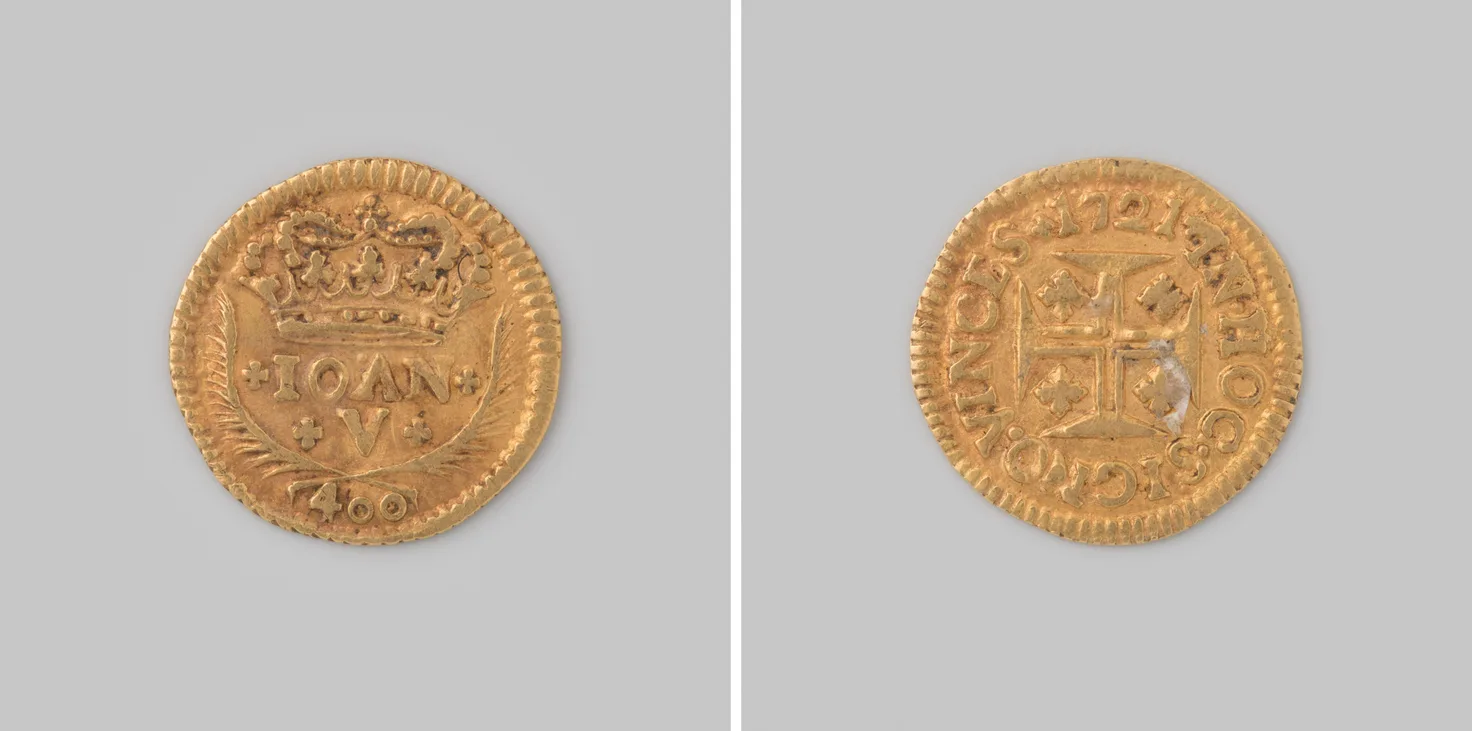
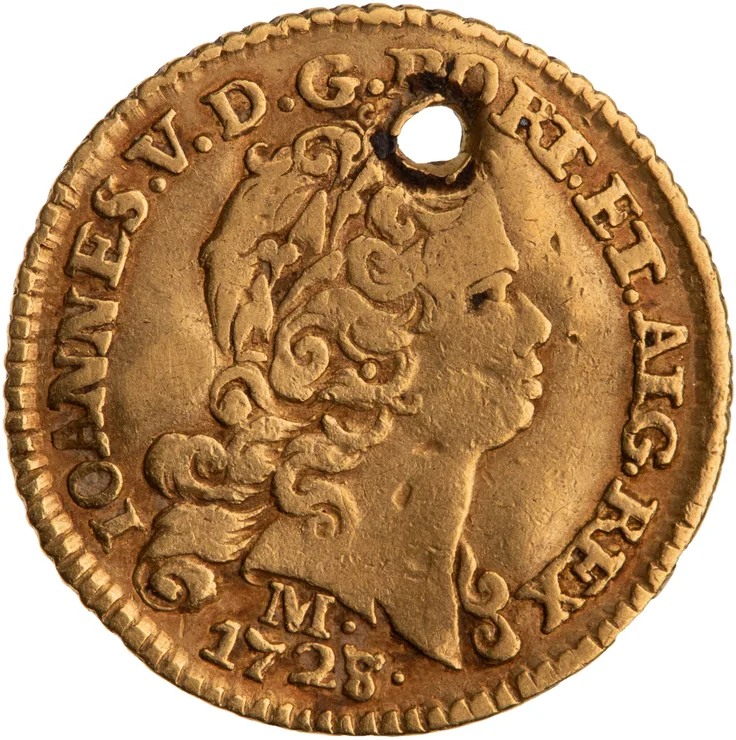
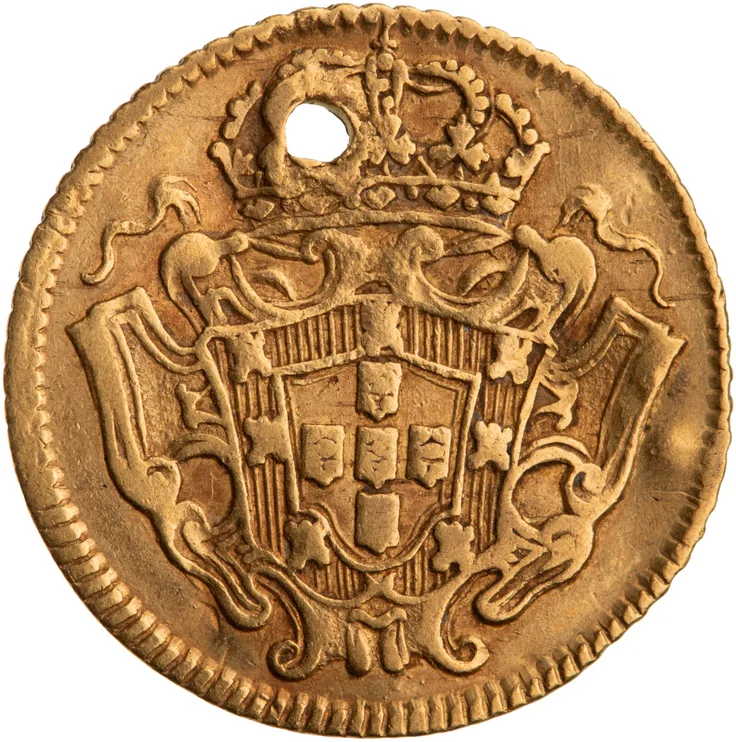
Under João V, Brazilian and Portuguese mints produced millions of gold coins bearing the royal arms and portrait. The photographs below identify examples of his coinage.Source: Banco de Portugal, Museu do Dinheiro: roteiro do museu / museum guideOpens in a new tabGo to the list of sources
A bank of issue and a crisis of confidence
Portugal’s central bank, nationalized in 1974.Source: Banco de Portugal, History of Banco de PortugalOpens in a new tab began in 1846 as both a commercial bank and a bank of issue. It resulted from the merger of Banco de Lisboa with Companhia Confiança Nacional, an investment company. It remained mostly privately owned until 1974.Source: Banco de Portugal, History of Banco de PortugalOpens in a new tabGo to the list of sources
Its early years coincided with monetary trouble. In 1846–1847, paper money became unredeemable and lost public confidence. A shortage of coins led the government to grant legal tender status to foreign coins and readmit older Portuguese coins into circulation. The Money Museum’s coin balance from 1848 has weights for different gold coins, allowing users to check for underweight pieces.Source: Banco de Portugal, Museu do Dinheiro: roteiro do museu / museum guideOpens in a new tabGo to the list of sources
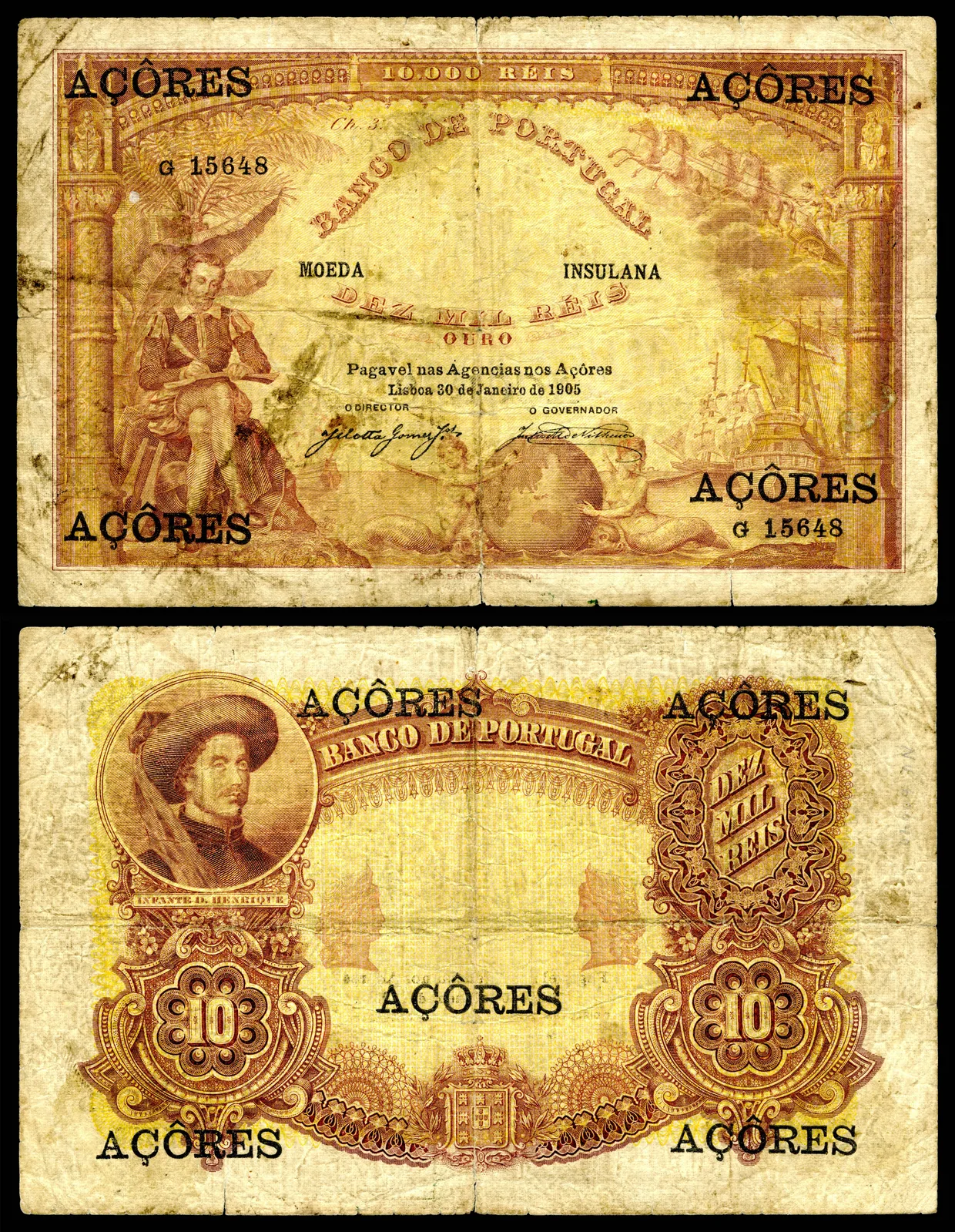
Banco de Portugal shared banknote issuance with other institutions until 1887. A decree of July 9, 1891 made it the sole issuer for mainland Portugal, the Azores, and Madeira. The financial and monetary crisis of that year also ended the conversion of its notes into metal coin.Source: Banco de Portugal, History of Banco de PortugalOpens in a new tabGo to the list of sources
The escudo reform of 1911
The monetary reform published in May 1911 replaced the real with the escudo. One escudo equaled 1,000 reis and was divided into 100 centavos; one centavo therefore corresponded to ten reis. The decree defined the new gold unit by the fine-gold content of the existing 1,000-reis gold coin. Its first article applied throughout the Republic’s territory except India.Source: Diário da República, Reforma monetária: Diário do Governo, 26 de maio de 1911, página 2135Opens in a new tabGo to the list of sources
The duplicate 500-escudo notes
In December 1925, the Alves dos Reis scandal came to light. His group obtained hundreds of thousands of duplicate 500-escudo notes from the English printer Waterlow & Sons. The Vasco da Gama issue bears the date November 17, 1922; it had circulated since February 1924. Alves dos Reis used the proceeds to found a bank, finance businesses in Angola, and buy shares in Banco de Portugal.Source: Banco de Portugal, Museu do Dinheiro: roteiro do museu / museum guideOpens in a new tabGo to the list of sources
Control over money and credit
A 1931 reform limited Banco de Portugal’s ability to finance the state. Its administrative dependence on the government increased, and the bank committed to pursuing a policy of fixed interest and exchange rates. During and after the Second World War, restrictions on international transactions created an extensive system of exchange controls.Source: Banco de Portugal, History of Banco de PortugalOpens in a new tabGo to the list of sources
After the war, trade and capital movements were gradually liberalized. Laws adopted between 1957 and 1960 gave Banco de Portugal greater powers to control credit and set interest rates.Source: Banco de Portugal, History of Banco de PortugalOpens in a new tabGo to the list of sources
After nationalization in September 1974, the 1975 Organic Law gave the bank the role of a central bank and, for the first time, powers to supervise the banking system. Especially after Portugal joined the European Community in 1986, the bank took on important monetary and credit control responsibilities. A 1990 law limited the financing of public deficits and increased the independence of its board. The 1995 reform changed its purpose: Price stability became the Bank’s main mission.
Source: Banco de Portugal, History of Banco de PortugalOpens in a new tabGo to the list of sourcesSource: Banco de Portugal, History of Banco de PortugalOpens in a new tabGo to the list of sources
The escudo and the euro
In April 1992, the escudo entered the The European system that linked participating currencies through central rates against the ECU, the European unit of account.Source: European Parliament, Fact Sheets on the European Union: History of the economic and monetary unionOpens in a new tab of the An arrangement for monetary cooperation among European countries. Participating currencies had limits on their exchange-rate movements, supported by central-bank intervention.Source: Banque de France, Governing the Banque de France: two lessons from history for an uncertain worldOpens in a new tab. Portugal fully liberalized capital movements that December. A January 1998 change to Banco de Portugal’s Organic Law strengthened the bank’s independence in preparation for the euro. In May, the European Union’s heads of state or government decided that Portugal would be among the 11 participating countries when the euro began in January 1999. Euro banknotes and coins entered circulation in 2002.Source: Banco de Portugal, History of Banco de PortugalOpens in a new tabGo to the list of sources
The fixed conversion rate was €1 = 200.482 escudos. At that rate, an illustrative 10,000 escudos becomes €49.88, rounded to cents. This changes the unit of an amount; it does not measure how much someone could buy with escudos in an earlier decade. The deadline for exchanging escudo banknotes was February 28, 2022.Figures computed by FXtab from:European Central Bank, Portugal: exchange of national banknotes and coinsOpens in a new tabGo to the list of sources Source: European Central Bank, Portugal: exchange of national banknotes and coinsOpens in a new tabGo to the list of sources Source: European Central Bank, Our moneyOpens in a new tabGo to the list of sources
- 1223–1248 (reign)Morabitino:Sancho II’s issue ends Portugal’s morabitino coinage.Source: Banco de Portugal, Museu do Dinheiro: roteiro do museu / museum guideOpens in a new tabGo to the list of sources
- 1384Beatriz’s real:probably minted in Santarém during a disputed succession.Source: Banco de Portugal, Museu do Dinheiro: roteiro do museu / museum guideOpens in a new tabGo to the list of sources
- 1499Gold português:minting begins for a coin worth ten cruzados.Source: Banco de Portugal, Museu do Dinheiro: roteiro do museu / museum guideOpens in a new tabGo to the list of sources
- 1846Banco de Portugal:a merger creates a commercial bank and banknote issuer.Source: Banco de Portugal, History of Banco de PortugalOpens in a new tabGo to the list of sources
- 1891One issuer:exclusive banknote issuance for mainland Portugal, the Azores, and Madeira.Source: Banco de Portugal, History of Banco de PortugalOpens in a new tabGo to the list of sources
- 1911Escudo:one escudo replaces 1,000 reis and divides into 100 centavos.Source: Diário da República, Reforma monetária: Diário do Governo, 26 de maio de 1911, página 2135Opens in a new tabGo to the list of sources
- 1931Bank reform:rules limit state financing; the bank commits to a policy of fixed interest and exchange rates.Source: Banco de Portugal, History of Banco de PortugalOpens in a new tabGo to the list of sources
- 1974–1975Central bank:nationalization and a new law redefine Banco de Portugal’s role.Source: Banco de Portugal, History of Banco de PortugalOpens in a new tabGo to the list of sources
- 1999–2002Euro:monetary union begins; euro cash follows.Source: Banco de Portugal, History of Banco de PortugalOpens in a new tabGo to the list of sources
Sources
Source: Banco de Portugal, including its Money Museum. The historical text is condensed and adapted by FXtab. The monetary reform is also drawn from the 1911 decree. Euro conversion: European Central Bank; example computed by FXtab. Coin identifications are cited beside each photograph. Photographs retain their creators’ credits and licenses.