Language and region

Sets number and date formats: 1,234.56 · Nov 10, 2026

Saved in this browser. Appearance has its own button in the header.

Articles

A history of money in Spain

How did Spain move from reales to pesetas and then euros? The peseta became the national monetary unit in 1868. Peseta banknotes followed in 1874, when the Spain’s central bank. The Banking Law of 1921 formalized its role in relation to private banks.Source: Banco de España, History of the Banco de EspañaOpens in a new tab gained the exclusive right to issue them. Civil war later split that currency into separate areas of acceptance. Spain adopted the euro in 1999, with euro cash arriving in 2002.Source: Banco de España, History of the Banco de EspañaOpens in a new tabGo to the list of sources Source: Banco de España, Historia de la pesetaOpens in a new tabGo to the list of sources

Coins before a national currency

Coinage in the Iberian Peninsula long predates the Spanish national currency. The Museo Arqueológico Nacional’s collection of ancient Hispanic coins covers issues from the fifth century BCE to the first century CE. Their inscriptions use Greek, Phoenician-Punic, indigenous, and Latin writing. These were coins of different communities and authorities, including the provincial coinage of Roman Hispania.Source: Museo Arqueológico Nacional, Monedas hispánicas: Sylloge Nummorum GraecorumOpens in a new tabGo to the list of sources

Reales before the peseta

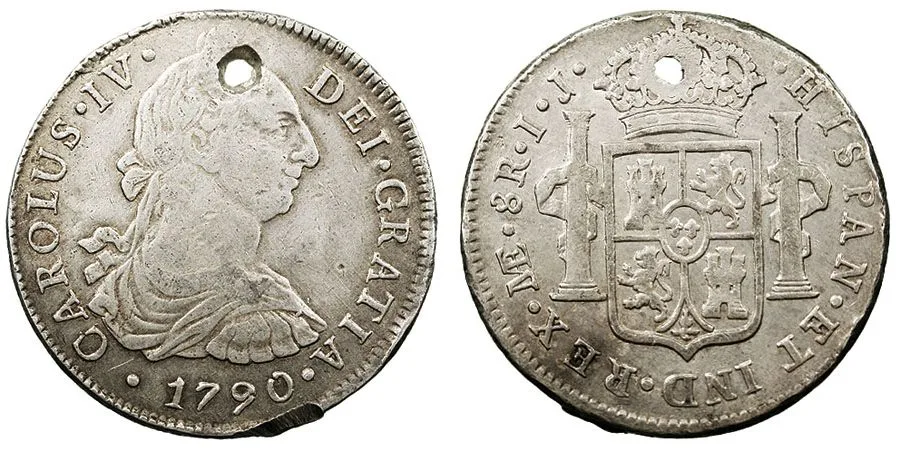
Reales still appeared in Spain’s accounts before the peseta. In 1829, Banco de España’s institutional history records a government debt to the Banco Nacional de San Carlos in reales. Banco de España distinguishes the silver real from the real de vellón, used as a A function of money that allows goods and services to be priced and their prices compared.Source: European Central Bank, What is money?Opens in a new tab in many transactions from the late seventeenth century.Source: Banco de España, History of the Banco de EspañaOpens in a new tabGo to the list of sources Source: Banco de España, Nota informativa — Billetes y monedas en pesetasOpens in a new tabGo to the list of sources
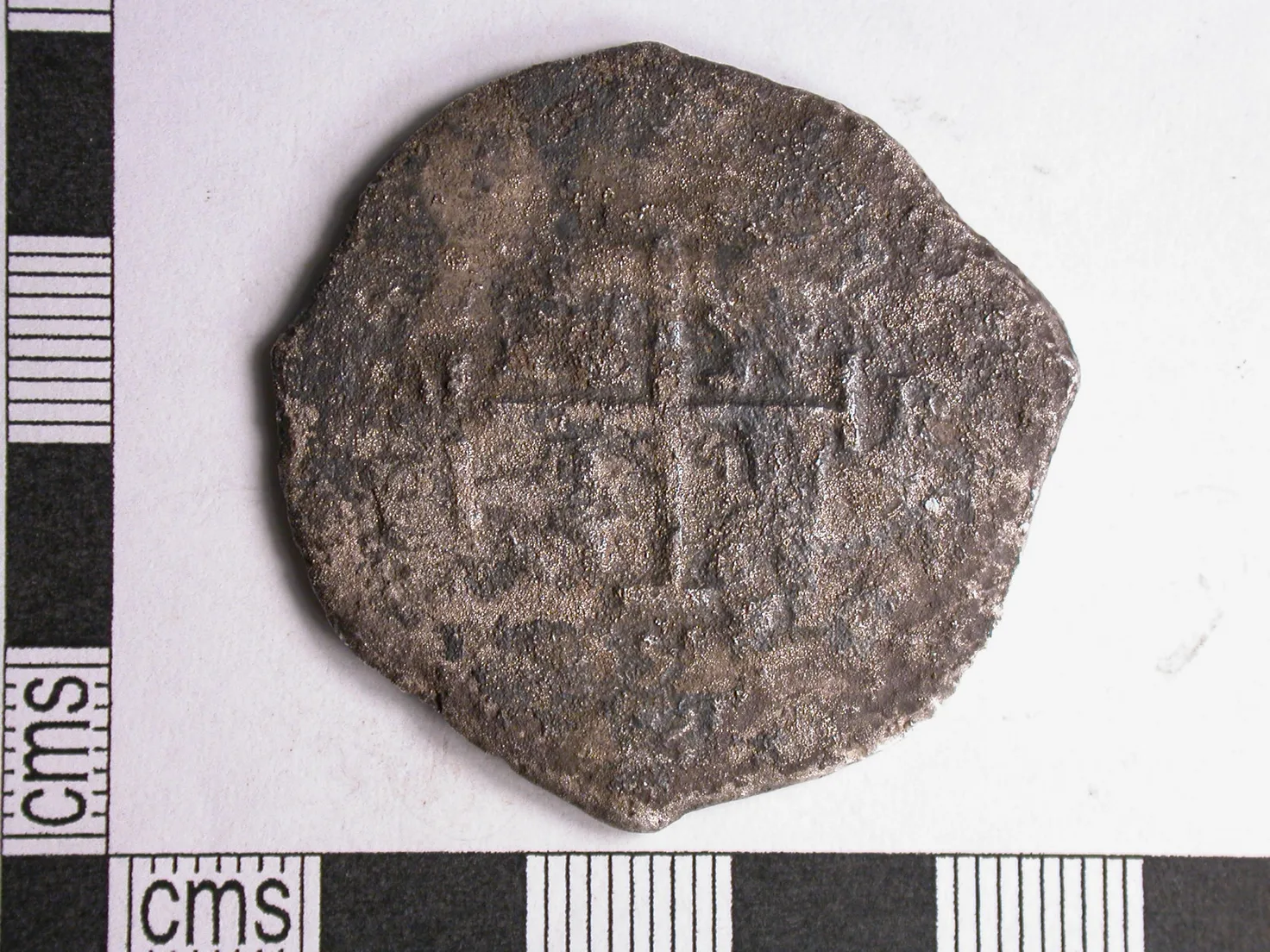
Irregular gray coin with a worn cross, beside a centimeter scale.
Figure 1. Eight reales of Philip IV, Potosí, 1658. Recorded by the Royal Institution of Cornwall. Image credit: Royal Institution of Cornwall, Anna Tyacke; image converted to WebP and resized by FXtab · CC BY 2.0Opens in a new tab · Eight reales of Philip IV (obverse) (FindID 769897).jpgOpens in a new tab
Two faces of a gray coin, each with a hole near the top. One has a profile bust with lettering and a date; the other has a crowned shield and columns.
Figure 2. Eight reales of Charles IV, Lima, 1790. Photograph by Numismática Pliego. Image credit: Numismática Pliego; image converted to WebP by FXtab without resizing · CC BY-SA 3.0Opens in a new tab · Carlos IV 8 reales 21379.jpgOpens in a new tab

The 1848 reform did not end Spain’s mix of coins. It also put the peseta into use as a multiple of the real: in that reform, one peseta equaled four reales.Source: European Central Bank, A farewell to the peseta — Eugenio Domingo Solans, 28 February 2002Opens in a new tabGo to the list of sources

Early banknotes

Spanish banknotes predated the peseta’s adoption as the national monetary unit in 1868. Founded in 1782, the Banco Nacional de San Carlos issued the first Spanish banknotes, though the public received them poorly. Its successors led to the institution named Banco de España in 1856. That year’s law allowed several banks to issue notes, with one bank of issue per financial center.Source: Banco de España, History of the Banco de EspañaOpens in a new tabGo to the list of sources
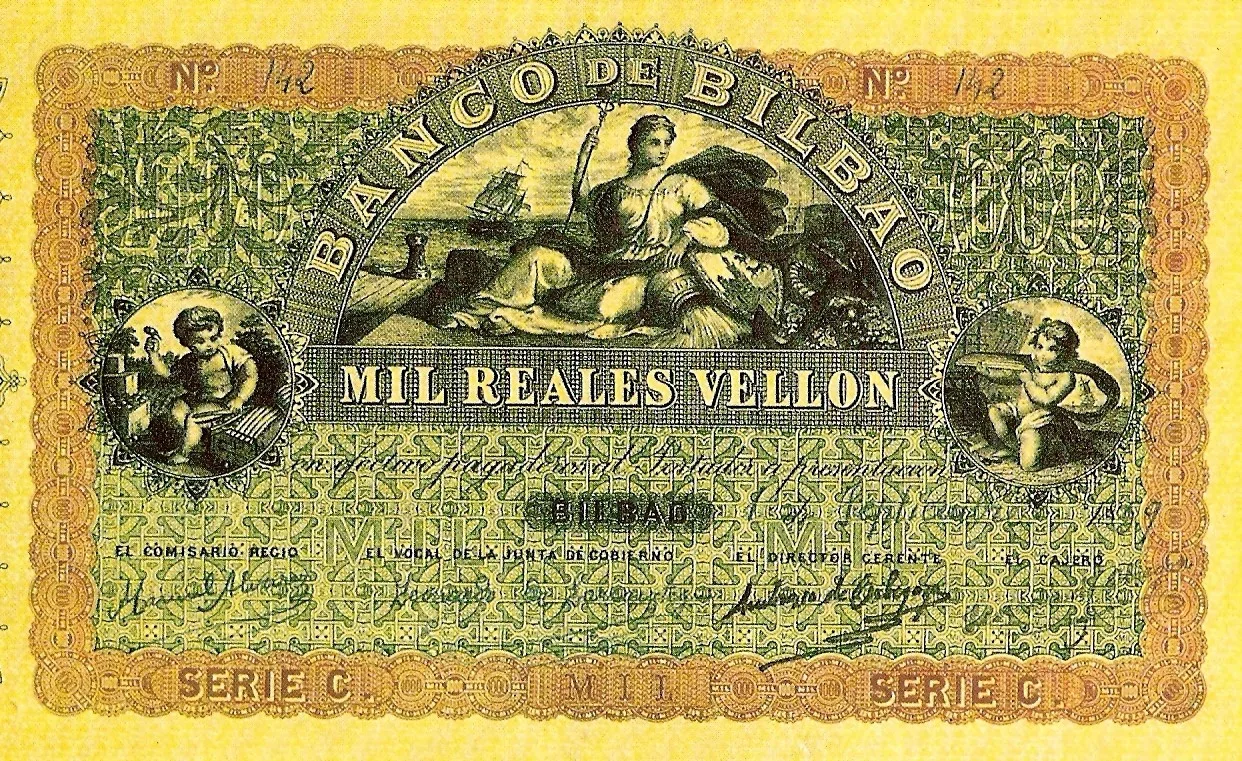
Yellow printed note with a green geometric pattern, a seated figure beneath an arch, two smaller figures in circles, and signatures below.
Figure 3. Banco de Bilbao, 1,000 reales de vellón, 1859. Image credit: Banco de Bilbao; scan uploaded by Karsten11, via Wikimedia Commons · Public domain — PD-old; pre-1931 publicationOpens in a new tab · Banco de Bilbao Mil Reales Vellon 1859.jpgOpens in a new tab

The 1864 reform introduced the escudo as the monetary unit and used the peseta as a silver coin worth less than an escudo. Its value of 40 cents of an escudo was the same as four reales. In 1868, the peseta became the unit of the system.Source: European Central Bank, A farewell to the peseta — Eugenio Domingo Solans, 28 February 2002Opens in a new tabGo to the list of sources

The peseta

On October 19, 1868, a decree made the peseta the monetary unit, rather than a coin valued in reales or escudos. The new unit was divided into 100 cents, and its first coins were struck in 1869.Source: European Central Bank, A farewell to the peseta — Eugenio Domingo Solans, 28 February 2002Opens in a new tabGo to the list of sources Source: Banco de España, Historia de la pesetaOpens in a new tabGo to the list of sources Source: Banco de España, History of the Banco de EspañaOpens in a new tabGo to the list of sources

The first peseta coins bore a female figure inspired by Roman coins struck under Hadrian. Banco de España’s history notes that later coins changed in value, metal, and design.Source: Banco de España, Historia de la pesetaOpens in a new tabGo to the list of sources

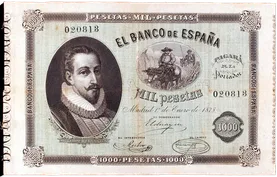
In 1874, the government granted Banco de España the monopoly on issuing banknotes in mainland Spain and its islands. In return, the bank provided a large government loan. Other banks of issue could become ordinary commercial banks or join Banco de España as branches. The first peseta banknote dates to July 1, 1874.Source: Banco de España, History of the Banco de EspañaOpens in a new tabGo to the list of sources Source: Banco de España, Historia de la pesetaOpens in a new tabGo to the list of sources
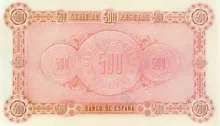
Front of a cream banknote with a seated woman at left, an oval portrait at right, and the denomination in ornate lettering.Back of the same banknote with a pale pink border, repeated 500 numerals, and overlapping circular designs.
Figure 4. Banco de España, 500-peseta design dated 1874. Front and back shown separately. Image credit: Domingo Martínez and Federico Navarrete; image by Basilio, via Wikimedia Commons · Public domain — expired design; Basilio’s worldwide image releaseOpens in a new tab · 1874-500ptas.jpgOpens in a new tab · cropped by FXtab
Green note with a large oval portrait on the left, a smaller scene with two riders above the center, and dark ornamental borders.
Figure 5. Banco de España, 1,000-peseta note dated 1878. Front. Image credit: Federico Navarrete y Fos; scan sourced from Numizon, uploaded by Raimundo Pastor, via Wikimedia Commons · Public domain — expired design; faithful two-dimensional scan (PD-Art)Opens in a new tab · Banco de España (01-01-1878) Miguel de Cervantes, billete de 1.000 pesetas, anverso.pngOpens in a new tab

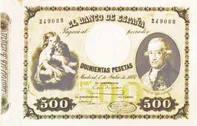
The 500-peseta note dated 1884 was made in Banco de España’s workshops. It was the first to reserve a blank space for a mark made in the paper.Source: Banco de España, Adiós, peseta — FNMT–Real Casa de la MonedaOpens in a new tabGo to the list of sources

A seated girl holding a small dog beside an older man’s oval portrait.
Figure 6. 500 pesetas, note dated July 1, 1884. Image credit: Banco de España (banknote image); FNMT–Real Casa de la Moneda (booklet) · Banco de España — faithful reproduction with attributionOpens in a new tab · Adiós, pesetaOpens in a new tab

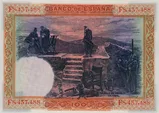
Issuing notes and controlling Measures a central bank takes to pursue its monetary goals, including influencing interest rates and borrowing conditions.Source: Deutsche Bundesbank, GlossaryOpens in a new tab developed at different times. The bank’s history describes the effect of the 1921 Banking Law: In effect, this Law was responsible for converting the Banco de España into a fully fledged central bank.Source: Banco de España, History of the Banco de EspañaOpens in a new tabGo to the list of sources The law gave it a supervisory role over private banks and made it the government’s principal institution for monetary policy. Banco de España also describes a banknote as a means of payment that carries images and ideas: the 1925 note below pairs Felipe II with El Escorial.Source: Banco de España, History of the Banco de EspañaOpens in a new tabGo to the list of sources Source: Banco de España, Informe Institucional 2022Opens in a new tabGo to the list of sources

Figures gathered around stone steps and a high-backed chair beneath a pink-purple sky.
Figure 7. 100-peseta note dated July 1, 1925, depicting Felipe II and El Escorial. Image credit: Banco de España · Banco de España — reproduction for teaching with attributionOpens in a new tab · Informe Institucional 2022Opens in a new tab

Two pesetas during the Civil War

During the Civil War of 1936–1939, Banco de España was divided between the Republican and Nationalist areas. Two issuing institutions produced two different pesetas, each recognized only in its own area. The examples below were issued by the Republican government and the government of Burgos.Source: Banco de España, Adiós, peseta — FNMT–Real Casa de la MonedaOpens in a new tabGo to the list of sourcesSource: Banco de España, Guía de archivos históricos de la banca en EspañaOpens in a new tabGo to the list of sourcesSource: Banco de España, History of the Banco de EspañaOpens in a new tabGo to the list of sources

A bearded head in an elaborate headpiece beside drawings of buildings within a blue border.
Figure 8. 25 pesetas, note dated August 31, 1936, issued by the Republican government. Image credit: Banco de España (banknote image); FNMT–Real Casa de la Moneda (booklet) · Banco de España — faithful reproduction with attributionOpens in a new tab · Adiós, pesetaOpens in a new tab
Bold lettering and an ornate numeral medallion within a geometric border, with a pale strip at the right.
Figure 9. 25-peseta note dated November 21, 1936, issued by the government of Burgos. Image credit: Banco de España (banknote image); FNMT–Real Casa de la Moneda (booklet) · Banco de España — faithful reproduction with attributionOpens in a new tab · Adiós, pesetaOpens in a new tab

Postwar money and government control

As it unfroze bank accounts, a 1939 law provided for conversion between Republican and Nationalist pesetas. A 1942 law brought together the separate financial records of the two institutions that had operated as Banco de España in opposing Civil War zones.Source: Banco de España, Guía de archivos históricos de la banca en EspañaOpens in a new tabGo to the list of sources In the postwar years before the 1959 Stabilization Plan, the peseta was fixed at 11 per dollar; rates in Tangier ranged from 20 to 30. Different exchange rates were then applied by transaction type.Source: European Central Bank, A farewell to the peseta — Eugenio Domingo Solans, 28 February 2002Opens in a new tabGo to the list of sources

Restoring banknote circulation after the war took considerable effort. From 1940 through 1954, shortages of metal led to large issues of one- and five-peseta notes for small transactions.Source: Banco de España, Adiós, peseta — FNMT–Real Casa de la MonedaOpens in a new tabGo to the list of sources

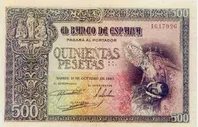
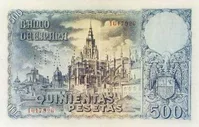
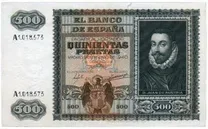
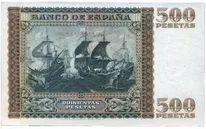
A 25-peseta note dated 1940 shows Juan de Herrera and the Patio de los Evangelistas at El Escorial. A 500-peseta note of the same date pairs Juan de Austria with a detail from La Batalla de Lepanto.Source: Banco de España, Billetes de peseta canjeablesOpens in a new tabGo to the list of sources

A bearded man's portrait and a grand building in two oval frames.A large pale number inside a geometric diamond beside a shield.
Figure 10. 25 pesetas, note dated January 9, 1940. Front and back. Image credit: Banco de España; Drawing and engraving: Vittorio Nicastro · Banco de España — faithful reproduction with attributionOpens in a new tab · Billetes de peseta canjeables — 25 pesetas, 9 de enero de 1940Opens in a new tab
A bearded man's portrait beside lettering and orange flourishes.A crowned shield between two columns, surrounded by gray ornament.
Figure 11. 50 pesetas, note dated January 9, 1940. Front and back. Image credit: Banco de España; Camilo Delhom · Banco de España — faithful reproduction with attributionOpens in a new tab · Billetes de peseta canjeables — 50 pesetas, 9 de enero de 1940Opens in a new tab
A central oval portrait between seated figures and floral decoration.A crowned shield between two circular number ornaments on brown.
Figure 12. 100 pesetas, note dated January 9, 1940. Front and back. Image credit: Banco de España; Vittorio Nicastro · Banco de España — faithful reproduction with attributionOpens in a new tab · Billetes de peseta canjeables — 100 pesetas, 9 de enero de 1940Opens in a new tab
A bearded man with a pleated collar inside a rectangular portrait frame.Several sailing ships on choppy water inside a rectangular frame.
Figure 13. 500 pesetas, note dated January 9, 1940. Front and back. Image credit: Banco de España; Paressi · Banco de España — faithful reproduction with attributionOpens in a new tab · Billetes de peseta canjeables — 500 pesetas, 9 de enero de 1940Opens in a new tab
A portrait inside a dark oval beside a large pale oval and curling decoration.Seated figures in a room inside a narrow frame beside a pale oval.
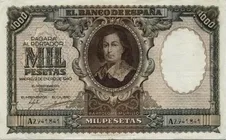
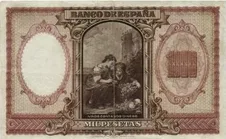
Figure 14. 1,000 pesetas, note dated January 9, 1940. Front and back. Image credit: Banco de España; N. Garassi · Banco de España — faithful reproduction with attributionOpens in a new tab · Billetes de peseta canjeables — 1.000 pesetas, 9 de enero de 1940Opens in a new tab
Draped figures beside a pale horse within a blue patterned border.A large shield inside a pale oval.
Figure 15. 1 peseta, note dated June 1, 1940. Front and back. Image credit: Banco de España · Banco de España — faithful reproduction with attributionOpens in a new tab · Billetes de peseta canjeables — 1 peseta, 1 de junio de 1940Opens in a new tab
A sailing ship inside a dark oval, surrounded by green and gold decoration.A large number in a long dark green ornamental panel.
Figure 16. 1 peseta, note dated September 4, 1940. Front and back. Image credit: Banco de España · Banco de España — faithful reproduction with attributionOpens in a new tab · Billetes de peseta canjeables — 1 peseta, 4 de septiembre de 1940Opens in a new tab
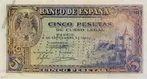
The Alcázar of Segovia on a ridge beside an oval coat of arms.A large blue number surrounded by symmetrical interlaced decoration.
Figure 17. 5 pesetas, note dated September 4, 1940. Front and back. Image credit: Banco de España · Banco de España — faithful reproduction with attributionOpens in a new tab · Billetes de peseta canjeables — 5 pesetas, 4 de septiembre de 1940Opens in a new tab
A bent draped figure beside lettering and dense purple decoration.A tall pointed building in a city scene, with a pale oval at the right.
Figure 18. 500 pesetas, note dated October 21, 1940. Front and back. Image credit: Banco de España; Drawing: José Luis L. Sánchez-Toda; Engraving: Camilo Delhom, José Luis L. Sánchez-Toda and Alfonso L. Sánchez-Toda (obverse) · Banco de España — faithful reproduction with attributionOpens in a new tab · Billetes de peseta canjeables — 500 pesetas, 21 de octubre de 1940Opens in a new tab
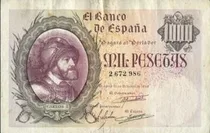
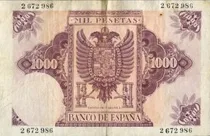
A bearded man in a cap inside a purple oval, with a small shield at the upper right.A large winged shield inside a tall decorated panel.
Figure 19. 1,000 pesetas, note dated October 21, 1940. Front and back. Image credit: Banco de España; Drawing and engraving: Camilo Delhom · Banco de España — faithful reproduction with attributionOpens in a new tab · Billetes de peseta canjeables — 1.000 pesetas, 21 de octubre de 1940Opens in a new tab
A woman wearing a tall crown and veil beside lettering.Figures gathered around a table in a dark green interior scene.
Figure 20. 5 pesetas, note dated February 13, 1943. Front and back. Image credit: Banco de España; José Luis L. Sánchez-Toda · Banco de España — faithful reproduction with attributionOpens in a new tab · Billetes de peseta canjeables — 5 pesetas, 13 de febrero de 1943Opens in a new tab
A group of standing figures beside a tall decorated number panel.A crowned man in profile wearing patterned robes beside lettering.
Figure 21. 1 peseta, note dated May 21, 1943. Back and front. Image credit: Banco de España · Banco de España — faithful reproduction with attributionOpens in a new tab · Billetes de peseta canjeables — 1 peseta, 21 de mayo de 1943Opens in a new tab
A woman in profile wearing a draped head covering inside an ornate frame.A standing figure over a map between decorated columns.
Figure 22. 1 peseta, note dated June 15, 1945. Front and back. Image credit: Banco de España; Drawing and engraving: José Luis L. Sánchez-Toda (signed on the plate on the reverse) · Banco de España — faithful reproduction with attributionOpens in a new tab · Billetes de peseta canjeables — 1 peseta, 15 de junio de 1945Opens in a new tab
Several standing figures, including one in a dark cloak, beside lettering on green.Mounted and standing figures with long diagonal poles in a crowded green scene.
Figure 23. 5 pesetas, note dated June 15, 1945. Front and back. Image credit: Banco de España; Drawing and engraving: José Luis L. Sánchez-Toda (obverse) and Alfonso L. Sánchez-Toda (reverse) · Banco de España — faithful reproduction with attributionOpens in a new tab · Billetes de peseta canjeables — 5 pesetas, 15 de junio de 1945Opens in a new tab

The 1946 Banking Law placed most monetary-policy powers with the government. It made Banco de España an instrument of the Ministry of Finance. Private banks had to hold deposits with Banco de España.Source: Banco de España, History of the Banco de EspañaOpens in a new tabGo to the list of sources

The 100-peseta note dated 1946 paired Goya with his design for the tapestry El Quitasol.Source: Banco de España, Billetes de peseta canjeablesOpens in a new tabGo to the list of sources

An older man's portrait beside lettering inside a floral border.Steep cliffs and small buildings beside a pale oval.
Figure 24. 25 pesetas, note dated February 19, 1946. Front and back. Image credit: Banco de España; Drawing: José Luis L. Sánchez-Toda; Engraving: José Luis L. Sánchez-Toda (obverse) and Alfonso L. Sánchez-Toda (reverse) · Banco de España — faithful reproduction with attributionOpens in a new tab · Billetes de peseta canjeables — 25 pesetas, 19 de febrero de 1946Opens in a new tab
An older man's portrait with tousled hair beside a broad cream field.Two figures beneath a large angled parasol beside a pale circle.
Figure 25. 100 pesetas, note dated February 19, 1946. Front and back. Image credit: Banco de España; Drawing and engraving: José Luis L. Sánchez-Toda (signed on the obverse) · Banco de España — faithful reproduction with attributionOpens in a new tab · Billetes de peseta canjeables — 100 pesetas, 19 de febrero de 1946Opens in a new tab
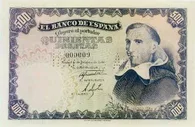
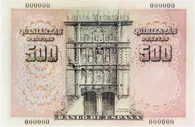
A man with a broad white collar beside a pale field and curling border.A narrow ornate building facade between pale floral panels.
Figure 26. 500 pesetas, note dated February 19, 1946. Front and back. Image credit: Banco de España; Drawing: José Luis L. Sánchez-Toda; Engraving: José Luis L. Sánchez-Toda (obverse) and Alfonso L. Sánchez-Toda (reverse, signed on the plate) · Banco de España — faithful reproduction with attributionOpens in a new tab · Billetes de peseta canjeables — 500 pesetas, 19 de febrero de 1946Opens in a new tab
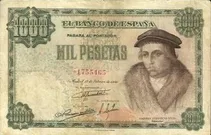
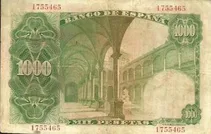
A man in a flat cap and thick collar beside lettering.A vaulted interior receding through arches beside a pale circle.
Figure 27. 1,000 pesetas, note dated February 19, 1946. Front and back. Image credit: Banco de España; Drawing: José Luis L. Sánchez-Toda; Engraving: José Luis L. Sánchez-Toda (obverse, signed on the plate) and Alfonso L. Sánchez-Toda (reverse) · Banco de España — faithful reproduction with attributionOpens in a new tab · Billetes de peseta canjeables — 1.000 pesetas, 19 de febrero de 1946Opens in a new tab
A man's head with wavy hair beside a large number and dark curling ornament.A large circular ornament between two smaller decorated number circles.
Figure 28. 5 pesetas, note dated April 12, 1947. Front and back. Image credit: Banco de España; Drawing and engraving: José Luis L. Sánchez-Toda · Banco de España — faithful reproduction with attributionOpens in a new tab · Billetes de peseta canjeables — 5 pesetas, 12 de abril de 1947Opens in a new tab
A man in a broad angled hat beside a pale field of lettering.Large outlined numbers and dense green ornament beside a pale circle.
Figure 29. 5 pesetas, note dated March 5, 1948. Front and back. Image credit: Banco de España; Drawing and engraving: E. Velamazán · Banco de España — faithful reproduction with attributionOpens in a new tab · Billetes de peseta canjeables — 5 pesetas, 5 de marzo de 1948Opens in a new tab
An older man with long wavy hair beside lettering and curled number ornaments.Figures and animals gathered beside a dark carriage and a pale circle.
Figure 30. 100 pesetas, note dated May 2, 1948. Front and back. Image credit: Banco de España; Design and engraving: Camilo Delhom (obverse) and José Luis L. Sánchez-Toda (reverse, signed on the plate) · Banco de España — faithful reproduction with attributionOpens in a new tab · Billetes de peseta canjeables — 100 pesetas, 2 de mayo de 1948Opens in a new tab
A woman's head with an elaborate covering beside lettering on gray-purple.A hanging floral form inside a dark scalloped frame between large numbers.
Figure 31. 1 peseta, note dated June 19, 1948. Front and back. Image credit: Banco de España; Drawing and engraving: José Luis L. Sánchez-Toda (obverse, signed on the plate) and Alfonso L. Sánchez-Toda (reverse) · Banco de España — faithful reproduction with attributionOpens in a new tab · Billetes de peseta canjeables — 1 peseta, 19 de junio de 1948Opens in a new tab
A group of figures, one raising an arm, beside a large pale circle.A portrait of Ramón Santillán beside lettering on faded green.
Figure 32. 1,000 pesetas, note dated November 4, 1949. Back and front. Image credit: Banco de España; Drawing and engraving: José Luis L. Sánchez-Toda (obverse and reverse) and Alfonso L. Sánchez-Toda (reverse) · Banco de España — faithful reproduction with attributionOpens in a new tab · Billetes de peseta canjeables — 1.000 pesetas, 4 de noviembre de 1949Opens in a new tab

A five-peseta note dated 1951 shows Jaime Balmes and a view of Vich with its cathedral. A 1,000-peseta note dated later that year pairs Joaquín Sorolla with his painting La fiesta del naranjo. The 1,000-peseta note dated 1957 shows the Catholic Monarchs and the central section of a screen in their chapel at Granada Cathedral.Source: Banco de España, Billetes de peseta canjeablesOpens in a new tabGo to the list of sources

A young man's portrait beside a broad cream field inside a green border.A small building scene inside an oval between a pale circle and a large number.
Figure 33. 5 pesetas, note dated August 16, 1951. Front and back. Image credit: Banco de España; Drawing and engraving: José Luis L. Sánchez-Toda (obverse) and Alfonso L. Sánchez-Toda (reverse) · Banco de España — faithful reproduction with attributionOpens in a new tab · Billetes de peseta canjeables — 5 pesetas, 16 de agosto de 1951Opens in a new tab
A bald man's portrait beside lettering and a pale circle on blue.A tomb sculpture beneath trees beside a pale circle.
Figure 34. 500 pesetas, note dated November 15, 1951. Front and back. Image credit: Banco de España; Drawing: José Luis L. Sánchez-Toda; Engraving: Camilo Delhom (obverse) and José Luis L. Sánchez-Toda (reverse) · Banco de España — faithful reproduction with attributionOpens in a new tab · Billetes de peseta canjeables — 500 pesetas, 15 de noviembre de 1951Opens in a new tab
A bearded man's profile with a broad angular headpiece beside lettering on gray.A helmet, lance, shield, basin, and books in an ornamental oval between large numerals.
Figure 35. 1 peseta, note dated November 19, 1951. Front and back. Image credit: Banco de España; Drawing and engraving: José Luis L. Sánchez-Toda · Banco de España — faithful reproduction with attributionOpens in a new tab · Billetes de peseta canjeables — 1 peseta, 19 de noviembre de 1951Opens in a new tab
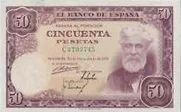
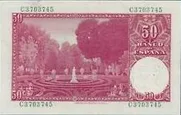
An older bearded man's portrait opposite a pale circle on purple.A formal garden with rows of trees and a central fountain on pink.
Figure 36. 50 pesetas, note dated December 31, 1951. Front and back. Image credit: Banco de España; Drawing: José Luis L. Sánchez Toda; Engraving: José Luis L. Sánchez Toda (obverse and reverse) and J. López Pavía (reverse) · Banco de España — faithful reproduction with attributionOpens in a new tab · Billetes de peseta canjeables — 50 pesetas, 31 de diciembre de 1951Opens in a new tab
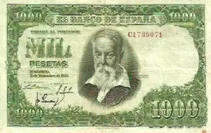
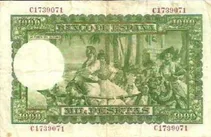
A long-bearded man's portrait inside a dark oval beside a pale circle.A group of figures beneath trees in Sorolla’s La fiesta del naranjo, on a green note.
Figure 37. 1,000 pesetas, note dated December 31, 1951. Front and back. Image credit: Banco de España; Drawing: José Luis L. Sánchez Toda; Engraving: Camilo Delhom (obverse and reverse) and José Luis L. Sánchez Toda (reverse) · Banco de España — faithful reproduction with attributionOpens in a new tab · Billetes de peseta canjeables — 1.000 pesetas, 31 de diciembre de 1951Opens in a new tab
A man's portrait in a dark jacket between pale fields inside a brown border.A woman rests her arms on a large rounded form against a brown field.
Figure 38. 100 pesetas, note dated April 7, 1953. Front and back. Image credit: Banco de España; Drawing and engraving: José Luis L. Sánchez-Toda · Banco de España — faithful reproduction with attributionOpens in a new tab · Billetes de peseta canjeables — 100 pesetas, 7 de abril de 1953Opens in a new tab
A bearded man with a pleated collar inside a reddish-brown border.A small sailing ship inside a brown frame with scalloped edges.
Figure 39. 1 peseta, note dated July 22, 1953. Front and back. Image credit: Banco de España; Drawing and engraving: José Luis L. Sánchez-Toda · Banco de España — faithful reproduction with attributionOpens in a new tab · Billetes de peseta canjeables — 1 peseta, 22 de julio de 1953Opens in a new tab
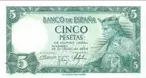
A crowned profile of Alfonso X beside a pale circle on a green note.A long building in perspective beside a pale circle on green.
Figure 40. 5 pesetas, note dated July 22, 1954. Front and back. Image credit: Banco de España; Drawing and engraving: Alfonso L. Sánchez-Toda · Banco de España — faithful reproduction with attributionOpens in a new tab · Billetes de peseta canjeables — 5 pesetas, 22 de julio de 1954Opens in a new tab
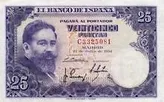
A man with a mustache and beard opposite a pale oval within purple decoration.A building with columns and a pointed roof beside a pale circle on purple.
Figure 41. 25 pesetas, note dated July 22, 1954. Front and back. Image credit: Banco de España; Design: José Luis L. Sánchez-Toda; Engraving: J. López Pavía (obverse) and José Luis L. Sánchez-Toda (reverse) · Banco de España — faithful reproduction with attributionOpens in a new tab · Billetes de peseta canjeables — 25 pesetas, 22 de julio de 1954Opens in a new tab
A man in a dark cap beside a large pale circle inside blue leaf decoration.Zuloaga’s view of Toledo beside a pale circle and a dark number panel.
Figure 42. 500 pesetas, note dated July 22, 1954. Front and back. Image credit: Banco de España; Design: José Luis L. Sánchez-Toda; Engraving: Alfonso L. Sánchez-Toda (obverse) and José Luis L. Sánchez-Toda (reverse) · Banco de España — faithful reproduction with attributionOpens in a new tab · Billetes de peseta canjeables — 500 pesetas, 22 de julio de 1954Opens in a new tab
Two overlapping portraits wearing elaborate headpieces inside a green border.A crowned eagle with two heads and spread wings bears a central shield amid green ornament.
Figure 43. 1,000 pesetas, note dated November 29, 1957. Front and back. Image credit: Banco de España; Drawing and engraving: José Luis L. Sánchez-Toda (obverse) and Alfonso L. Sánchez-Toda (reverse) · Banco de España — faithful reproduction with attributionOpens in a new tab · Billetes de peseta canjeables — 1.000 pesetas, 29 de noviembre de 1957Opens in a new tab

The 1959 plan and the nationalized bank

The 1959 Stabilization Plan set an exchange rate of 60 pesetas per dollar. It also laid the foundations for Banco de España to recover powers as Spain opened its economy to the outside world.Source: European Central Bank, A farewell to the peseta — Eugenio Domingo Solans, 28 February 2002Opens in a new tabGo to the list of sourcesSource: Banco de España, History of the Banco de EspañaOpens in a new tabGo to the list of sources

The state took ownership of Banco de España in 1962, ending its status as a public limited company. The bank was still not independent: responsibility for monetary policy remained with the Ministry of Finance, while Banco de España implemented it. The bank took charge of foreign payments and the centralization of reserves in 1969.Source: Banco de España, History of the Banco de EspañaOpens in a new tabGo to the list of sources

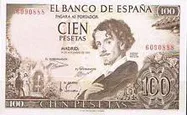
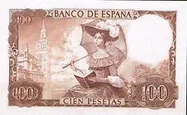
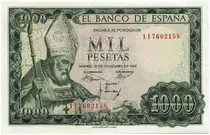
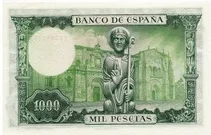
Two notes dated 1965 draw on different parts of Spain’s past. The 100-peseta note depicts Gustavo Adolfo Bécquer and a romantic-era woman with Seville Cathedral behind her. The 1,000-peseta note depicts San Isidoro and the basilica in León that bears his name.Source: Banco de España, Billetes de peseta canjeablesOpens in a new tabGo to the list of sources

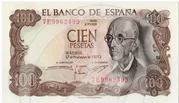
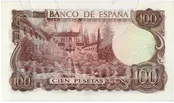
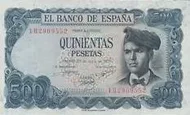
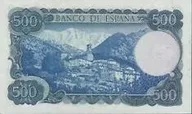
These notes and the later designs dated 1970–1971 belong to a period when Banco de España was nationalized but still carried out monetary policy set by the Ministry of Finance. The later notes portray musician Manuel de Falla, poet Jacinto Verdaguer, and former finance minister José Echegaray.Source: Banco de España, History of the Banco de EspañaOpens in a new tabGo to the list of sourcesSource: Banco de España, Billetes de peseta canjeablesOpens in a new tabGo to the list of sources

A curly-haired young man in profile beside a pale field.A woman holding a parasol beside Seville Cathedral and the Giralda tower.
Figure 44. 100 pesetas, note dated November 19, 1965. Front and back. Image credit: Banco de España; Drawing: Mateo García Navarro (obverse) and Emilio Marín Jimeno (reverse); Engraving: Alfonso L. Sánchez-Toda (obverse, signed on the plate) and José Luis L. Sánchez-Toda (reverse) · Banco de España — faithful reproduction with attributionOpens in a new tab · Billetes de peseta canjeables — 100 pesetas, 19 de noviembre de 1965Opens in a new tab
A bearded man in a tall pointed hat beside a broad cream field.A tall robed figure in front of an arched building on green.
Figure 45. 1,000 pesetas, note dated November 19, 1965. Front and back. Image credit: Banco de España; Drawing: José Luis L. Sánchez-Toda and Emilio Marín Jimeno; Engraving: Antonio Manso Fernández (obverse) and José Luis L. Sánchez-Toda (reverse) · Banco de España — faithful reproduction with attributionOpens in a new tab · Billetes de peseta canjeables — 1.000 pesetas, 19 de noviembre de 1965Opens in a new tab
An older man wearing glasses beside a broad pale field and curled border.The Patio de los Surtidores at the Generalife, with tall narrow trees and a pale oval.
Figure 46. 100 pesetas, note dated November 17, 1970. Front and back. Image credit: Banco de España; Drawing: José Antonio Prieto (obverse) and Mateo García Navarro (reverse); Engraving: Antonio Manso Fernández (obverse) and Daniel Carande (reverse) · Banco de España — faithful reproduction with attributionOpens in a new tab · Billetes de peseta canjeables — 100 pesetas, 17 de noviembre de 1970Opens in a new tab
A man in a dark cap opposite a pale oval inside a blue-gray frame.Mountains and clustered buildings beside a pale circle on blue.
Figure 47. 500 pesetas, note dated July 23, 1971. Front and back. Image credit: Banco de España; Design: Mateo García Navarro (obverse) and José Antonio Prieto (reverse); Engraving: Antonio Manso Fernández (obverse) and Daniel Carande (reverse) · Banco de España — faithful reproduction with attributionOpens in a new tab · Billetes de peseta canjeables — 500 pesetas, 23 de julio de 1971Opens in a new tab
An older man with a long pointed beard beside a pale pink field.A large corner building with many windows beside a broad pale oval.
Figure 48. 1,000 pesetas, note dated September 17, 1971. Front and back. Image credit: Banco de España; Design: Mateo García Navarro; Engraving: Antonio Manso Fernández (obverse) and Antonino Sánchez Gutiérrez (reverse) · Banco de España — faithful reproduction with attributionOpens in a new tab · Billetes de peseta canjeables — 1.000 pesetas, 17 de septiembre de 1971Opens in a new tab

Monetary policy before the euro

On January 22, 1974, Spain allowed the peseta to An exchange rate allowed to move with supply and demand in the foreign exchange market.Source: Deutsche Bundesbank, GlossaryOpens in a new tab, while retaining official intervention in the exchange market.Source: Bank for International Settlements, Forty-fourth Annual Report, 1974Opens in a new tabGo to the list of sources

A man in a dark coat inside an oval opposite a pale rounded field.A long grand building beside a large pale circle inside a fine gray border.
Figure 49. 5,000 pesetas, note dated February 6, 1976. Front and back. Image credit: Banco de España; Design: Alfonso L. Sánchez-Toda and Mateo García Navarro (obverse) and José Antonio Prieto (reverse); Engraving: Antonio Manso Fernández · Banco de España — faithful reproduction with attributionOpens in a new tab · Billetes de peseta canjeables — 5.000 pesetas, 6 de febrero de 1976Opens in a new tab

The 1977 wage and employment decree linked restraint in wage increases to expected price increases. It put into effect economic agreements between the government and the parliamentary parties. At the end of 1978, another decree, based on the Moncloa Pacts, reported lower inflation but stressed the cost in unemployment. Restraining inflation and creating jobs remained its objectives.Source: Agencia Estatal Boletín Oficial del Estado, Real Decreto-ley 43/1977, sobre política salarial y empleoOpens in a new tabGo to the list of sourcesSource: Agencia Estatal Boletín Oficial del Estado, Real Decreto-ley 49/1978, sobre política de rentas y empleoOpens in a new tabGo to the list of sources

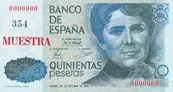
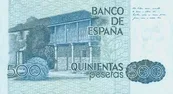
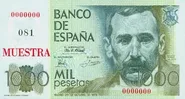
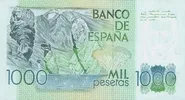
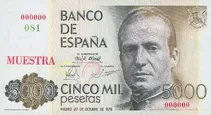
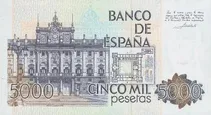
Among the notes dated 1979, the 500-peseta design portrays Rosalía de Castro and reproduces a handwritten passage from Follas Novas. The 1,000-peseta note portrays Benito Pérez Galdós with a handwritten passage from Zaragoza; the 5,000-peseta note portrays King Juan Carlos I.Source: Banco de España, Billetes de peseta canjeablesOpens in a new tabGo to the list of sources

A portrait of Rosalía de Castro on blue, with red lettering at the left.A low building with a tiled roof and wooden balcony on blue.
Figure 50. 500 pesetas, note dated October 23, 1979. Front and back. Image credit: Banco de España; Engraving: Pablo Sampedro Molero (obverse) and Antonino Sánchez Gutiérrez (reverse) · Banco de España — faithful reproduction with attributionOpens in a new tab · Billetes de peseta canjeables — 500 pesetas, 23 de octubre de 1979Opens in a new tab
A man's portrait on green, with red lettering at the left.A blue-green view of Teide's rocky landscape, with a pale strip at the right.
Figure 51. 1,000 pesetas, note dated October 23, 1979. Front and back. Image credit: Banco de España; Drawing: Daniel Vázquez Díaz; Engraving: Pablo Sampedro Molero (obverse) and Antonino Sánchez Gutiérrez (reverse) · Banco de España — faithful reproduction with attributionOpens in a new tab · Billetes de peseta canjeables — 1.000 pesetas, 23 de octubre de 1979Opens in a new tab
A man's portrait beside fine patterns and red lettering.An ornate building facade beside faint plans and a pale strip.
Figure 52. 5,000 pesetas, note dated October 23, 1979. Front and back. Image credit: Banco de España; Engraving: Antonio Manso Fernández (obverse) and Daniel Carande (reverse) · Banco de España — faithful reproduction with attributionOpens in a new tab · Billetes de peseta canjeables — 5.000 pesetas, 23 de octubre de 1979Opens in a new tab

A 1980 law recognized substantial autonomy for Banco de España in its functions and organization.Source: Banco de España, History of the Banco de EspañaOpens in a new tabGo to the list of sources

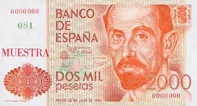
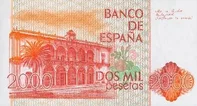
As the peseta lost value, new banknotes took on higher denominations. A 5,000-peseta note was issued in 1976, followed by a 2,000-peseta note in 1980.Source: Banco de España, Adiós, peseta — FNMT–Real Casa de la MonedaOpens in a new tabGo to the list of sources

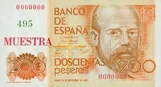
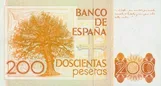
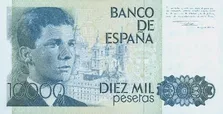
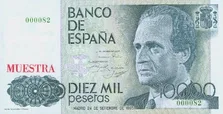
The 1980 notes portrayed writers: Juan Ramón Jiménez on 2,000 pesetas and Leopoldo Alas, known as Clarín, on 200 pesetas. The 10,000-peseta note dated 1985 paired King Juan Carlos I with Prince Felipe and views of El Escorial.Source: Banco de España, Billetes de peseta canjeablesOpens in a new tabGo to the list of sources

A man with a mustache and beard on orange, with red lettering.A long arched building and palm trees on orange, with a pale right strip.
Figure 53. 2,000 pesetas, note dated July 22, 1980. Front and back. Image credit: Banco de España; Engraving: Pablo Sampedro Molero (obverse) and Antonino Sánchez Gutiérrez (reverse) · Banco de España — faithful reproduction with attributionOpens in a new tab · Billetes de peseta canjeables — 2.000 pesetas, 22 de julio de 1980Opens in a new tab
A bearded man wearing glasses on orange, with red lettering.A broad leafy tree on orange beside a pale strip with an oval ornament.
Figure 54. 200 pesetas, note dated September 16, 1980. Front and back. Image credit: Banco de España; Drawing: Víctor Hevia (portrait of Clarín); Engraving: José Manuel Mata Martín (obverse) and Antonino Sánchez Gutiérrez (reverse) · Banco de España — faithful reproduction with attributionOpens in a new tab · Billetes de peseta canjeables — 200 pesetas, 16 de septiembre de 1980Opens in a new tab
A young man's portrait over a faint building scene, with a pale strip at the right.An older man in a dark jacket beside red lettering.
Figure 55. 10,000 pesetas, note dated September 24, 1985. Back and front. Image credit: Banco de España; Engraving: Pablo Sampedro Molero (portrait of the king on the obverse) and Antonino Sánchez Gutiérrez (portrait of the prince on the reverse) · Banco de España — faithful reproduction with attributionOpens in a new tab · Billetes de peseta canjeables — 10.000 pesetas, 24 de septiembre de 1985Opens in a new tab

The accession treaty signed in June 1985 provided for Spain and Portugal to join the European Economic Community. Article 2 set its entry into force for January 1, 1986, subject to the required ratifications.Source: Publications Office of the European Union (EUR-Lex), Treaty of accession of Spain and Portugal, Article 2Opens in a new tabGo to the list of sources

The 1988 Banking Discipline and Intervention Law extended Banco de España’s supervision to all kinds of credit institutions.Source: Banco de España, History of the Banco de EspañaOpens in a new tabGo to the list of sources

By the late 1980s, the peseta was pegged within the European Monetary System’s exchange rate mechanism. The system set a band for its exchange rate; monetary authorities intervened to keep the peseta from rising above the band’s upper limit.Source: European Central Bank, A farewell to the peseta — Eugenio Domingo Solans, 28 February 2002Opens in a new tabGo to the list of sources

The 1992 banknote issue commemorated the fifth centenary of Christopher Columbus’s arrival in the Americas.Source: Banco de España, Adiós, peseta — FNMT–Real Casa de la MonedaOpens in a new tabGo to the list of sourcesSource: Banco de España, Billetes de peseta canjeablesOpens in a new tabGo to the list of sources

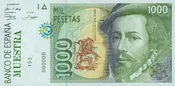
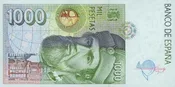
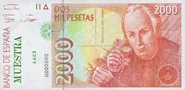
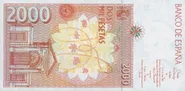
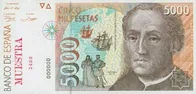
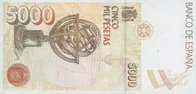
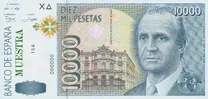
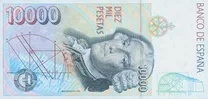
The last issue of peseta banknotes was dated 1992. Its designs combined historical portraits with places and objects: the 2,000-peseta note pairs the scientist José Celestino Mutis with the Royal Botanical Garden; the 1,000-peseta note pairs Hernán Cortés with Francisco Pizarro and Lima Cathedral. The 5,000-peseta note depicts Christopher Columbus and ships, while the 10,000-peseta note pairs King Juan Carlos I with the scientist Jorge Juan.Source: Banco de España, Nota informativa — Billetes y monedas en pesetasOpens in a new tabGo to the list of sources Source: Banco de España, Billetes de peseta canjeablesOpens in a new tabGo to the list of sources

Green note with a large portrait of a bearded man on the right, a yellow oval near the center, and a pale strip on the left.Green and blue note with a sideways portrait, a curved grid and an architectural drawing, beside a broad pale strip.
Figure 56. 1,000 pesetas, 1992. Both sides. Image credit: Banco de España; Design by Reinhold Gerstetter; Portraits engraved by Juan Carlos Heras Vicario and Alfredo Adán de Oro Sanz · Banco de España — faithful reproduction with attributionOpens in a new tab · Billetes de peseta canjeables — 1.000 pesetas, 12 de octubre de 1992Opens in a new tab
A man holding a small round object near his face, with green lettering.A building facade beside a large flower-shaped pattern in yellow and orange.
Figure 57. 2,000 pesetas, note dated April 24, 1992. Front and back. Image credit: Banco de España; Sketch: Isabel Quintanilla and Reinhold Gerstetter; Engraving: Pablo Sampedro Molero (portrait on the obverse) · Banco de España — faithful reproduction with attributionOpens in a new tab · Billetes de peseta canjeables — 2.000 pesetas, 24 de abril de 1992Opens in a new tab
A man's portrait beside small ships and figures, with red lettering at the left.A sphere made of intersecting rings on a pedestal beside a pale strip.
Figure 58. 5,000 pesetas, note dated October 12, 1992. Front and back. Image credit: Banco de España; Sketch: Reinhold Gerstetter; Engraving: Antonino Sánchez Gutiérrez (portrait of Colón on the obverse) · Banco de España — faithful reproduction with attributionOpens in a new tab · Billetes de peseta canjeables — 5.000 pesetas, 12 de octubre de 1992Opens in a new tab
A man's portrait beside an ornate building, with green lettering at the left.A vertical portrait of Jorge Juan beside drawings for building a ship.
Figure 59. 10,000 pesetas, note dated October 12, 1992. Front and back. Image credit: Banco de España; Sketch: Reinhold Gerstetter; Engraving: José López Pavía (portrait of the king on the obverse) · Banco de España — faithful reproduction with attributionOpens in a new tab · Billetes de peseta canjeables — 10.000 pesetas, 12 de octubre de 1992Opens in a new tab

From an independent central bank to the euro

The 1994 autonomy law made Banco de España independent of the government when setting monetary policy. It also prohibited financing public authorities. These changes prepared Spain for European monetary union.Source: Banco de España, History of the Banco de EspañaOpens in a new tabGo to the list of sources

The peseta was devalued—its exchange value was lowered—on four occasions between 1992 and 1995. That period included the bank’s 1994 reform, before the peseta reached the exchange rate at which it joined the euro.Source: European Central Bank, A farewell to the peseta — Eugenio Domingo Solans, 28 February 2002Opens in a new tabGo to the list of sources Source: Banco de España, History of the Banco de EspañaOpens in a new tabGo to the list of sources

On January 1, 1999, Spain adopted the euro as its unit of account and began sharing a common monetary policy with the other participating countries.Source: Banco de España, History of the Banco de EspañaOpens in a new tabGo to the list of sources

Euro banknotes and coins entered circulation on January 1, 2002. Peseta cash remained Money a creditor must accept to settle a debt, subject to applicable exceptions. The European Commission describes this as mandatory acceptance unless the parties agree on another means of payment.Source: Publications Office of the European Union (EUR-Lex), Commission Recommendation 2010/191/EU — ENOpens in a new tab alongside them until February 28, 2002. The fixed conversion rate was €1 = 166.386 pesetas. Banco de España’s exchange of peseta notes and coins ended on June 30, 2021.Figures computed by FXtab from:European Central Bank, Spain: exchange of national banknotes and coinsOpens in a new tabGo to the list of sources Source: European Central Bank, Spain: exchange of national banknotes and coinsOpens in a new tabGo to the list of sources Source: Banco de España, Historia de la pesetaOpens in a new tabGo to the list of sources Source: European Central Bank, Our moneyOpens in a new tabGo to the list of sources
At the official rate, 10,000 pesetas converts to €60.10, rounded to cents. This is a conversion between currency units. It does not measure what those pesetas bought in an earlier year.Figures computed by FXtab from:European Central Bank, Spain: exchange of national banknotes and coinsOpens in a new tabGo to the list of sources
  1. 1782Banco Nacional de San Carlos:foundation of the bank that issued the first Spanish banknotes.Source: Banco de España, History of the Banco de EspañaOpens in a new tabGo to the list of sources
  2. 1848Peseta and real:one peseta equaled four reales after the reform.Source: European Central Bank, A farewell to the peseta — Eugenio Domingo Solans, 28 February 2002Opens in a new tabGo to the list of sources
  3. 1856Several issuers:Banco de España takes its name; the law allows one bank of issue per financial center.Source: Banco de España, History of the Banco de EspañaOpens in a new tabGo to the list of sources
  4. 1864Escudo:a silver peseta was worth 40 cents of an escudo.Source: European Central Bank, A farewell to the peseta — Eugenio Domingo Solans, 28 February 2002Opens in a new tabGo to the list of sources
  5. 1868Peseta:a national unit divided into 100 cents.Source: Banco de España, History of the Banco de EspañaOpens in a new tabGo to the list of sources
  6. 1874Banknote monopoly:Banco de España becomes the sole issuer in mainland Spain and its islands.Source: Banco de España, History of the Banco de EspañaOpens in a new tabGo to the list of sources
  7. 1921Central bank:the Banking Law gives Banco de España supervision over private banks and a monetary-policy role.Source: Banco de España, History of the Banco de EspañaOpens in a new tabGo to the list of sources
  8. 1936–1939Divided currency:each side of the Civil War accepts its own peseta.Source: Banco de España, History of the Banco de EspañaOpens in a new tabGo to the list of sources
  9. 1946Government control:the Banking Law gives most monetary-policy powers to the government.Source: Banco de España, History of the Banco de EspañaOpens in a new tabGo to the list of sources
  10. 1959Stabilization Plan:lays the foundations for Banco de España to recover powers.Source: Banco de España, History of the Banco de EspañaOpens in a new tabGo to the list of sources
  11. 1962Nationalization:Banco de España is nationalized.Source: Banco de España, History of the Banco de EspañaOpens in a new tabGo to the list of sources
  12. 1974Peseta floats:Spain allows the peseta to float while retaining official intervention.Source: Bank for International Settlements, Forty-fourth Annual Report, 1974Opens in a new tabGo to the list of sources
  13. 1980Autonomy:A law recognizes substantial autonomy for the bank’s functions and organization.Source: Banco de España, History of the Banco de EspañaOpens in a new tabGo to the list of sources
  14. Late 1980sExchange rate mechanism:The peseta is pegged within a European exchange-rate band.Source: European Central Bank, A farewell to the peseta — Eugenio Domingo Solans, 28 February 2002Opens in a new tabGo to the list of sources
  15. 1992–1995Devaluations:The peseta is devalued on four occasions before its euro conversion rate is reached.Source: European Central Bank, A farewell to the peseta — Eugenio Domingo Solans, 28 February 2002Opens in a new tabGo to the list of sources
  16. 1994Independence:Banco de España gains independence from the government in setting monetary policy.Source: Banco de España, History of the Banco de EspañaOpens in a new tabGo to the list of sources
  17. 1999Euro:Spain adopts the euro as its unit of account and shares a common monetary policy.Source: Banco de España, History of the Banco de EspañaOpens in a new tabGo to the list of sources
  18. 2002Euro cash:euro banknotes and coins enter circulation.Source: Banco de España, History of the Banco de EspañaOpens in a new tabGo to the list of sources
  19. 2021Peseta exchange ends:Banco de España ends the exchange of peseta notes and coins.Source: Banco de España, Historia de la pesetaOpens in a new tabGo to the list of sources
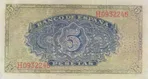
Figure 60. Selected events in Spain’s currency and central bank. Drawn by FXtab from: Banco de España, History of the Banco de EspañaOpens in a new tab · Banco de España, HistoriaOpens in a new tab · Banco de España, Historia de la pesetaOpens in a new tab · Banco de España, Historia de la pesetaOpens in a new tab · Bank for International Settlements, Forty-fourth Annual Report, 1974Opens in a new tab · European Central Bank, A farewell to the peseta — Eugenio Domingo Solans, 28 February 2002Opens in a new tab · European Central Bank, DESPEDIDA DE LA PESETA — Eugenio Domingo Solans, 28 de febrero de 2002Opens in a new tab

Sources

Source: Banco de España; Museo Arqueológico Nacional (Ministerio de Cultura); European Central Bank. Example computed by FXtab.