A history of money in Britain
How did pounds, shillings and pence work, and what changed when Britain went decimal? People reckoned with 20 shillings to the pound and 12 pence to the shilling. Decimalisation kept the pound but divided it into 100 new pence.Figures computed by FXtab from:The National Archives (UK), Currency converter: historical prices, wages, and calculation codeOpens in a new tabThe National Archives, legislation.gov.uk; King's Printer of Acts of Parliament, Decimal Currency Act 1967Opens in a new tabGo to the list of sources
Reading an account in old money
Before decimalisation, a pound contained 20 shillings or 240 old pence. A shilling contained 12 pence. Addition and subtraction crossed two boundaries: pence became shillings, then shillings became pounds.Figures computed by FXtab from:The National Archives (UK), Currency converter: historical prices, wages, and calculation codeOpens in a new tabThe National Archives, legislation.gov.uk; King's Printer of Acts of Parliament, Decimal Currency Act 1967Opens in a new tabGo to the list of sources
In written amounts, s marked shillings and d marked old pence, as in the Decimal Currency Act 1969’s conversion table.Source: The National Archives, legislation.gov.uk; King's Printer of Acts of Parliament, Decimal Currency Act 1969: as enactedOpens in a new tabGo to the list of sources
For example, suppose a customer paid a pound for goods priced at 13s 8d. FXtab converts that hypothetical bill to 164 old pence. Subtracting it from a pound leaves 76 old pence, or 6s 4d in change. The calculation uses the old units; the price is an invented example.Figures computed by FXtab from:The National Archives (UK), Currency converter: historical prices, wages, and calculation codeOpens in a new tabThe National Archives, legislation.gov.uk; King's Printer of Acts of Parliament, Decimal Currency Act 1967Opens in a new tabGo to the list of sources
Recorded prices give those units a setting. The National Archives describes typical seventeenth-century stagecoach fares of four or five pence a mile for inside passengers, against two or three outside. The fare depended on whether the passenger travelled inside or outside the coach.Source: The National Archives (UK), Living in the 17th centuryOpens in a new tabGo to the list of sources
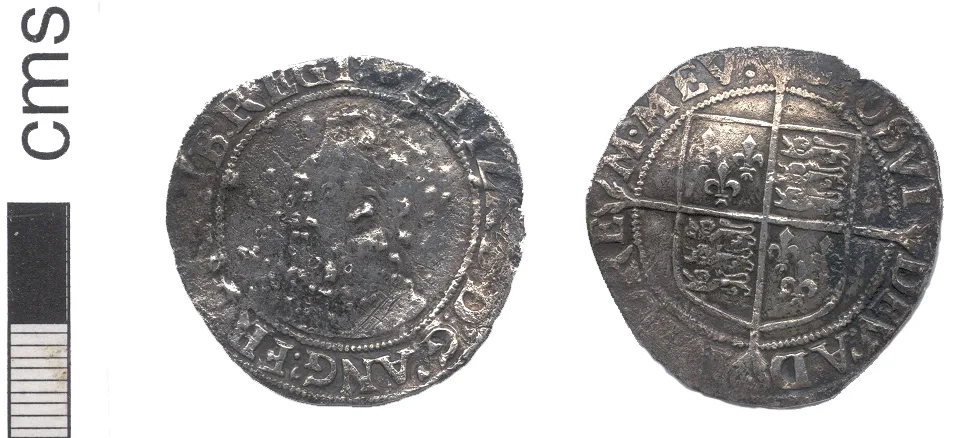
Coins themselves changed during that century. The National Archives dates the Royal Mint’s first issues of coins with milled edges to February 1663. It names Pierre Blondeau as the developer of the machine used to make them; the edges were intended to prevent people clipping metal from the coins.Source: The National Archives (UK), Living in the 17th centuryOpens in a new tabGo to the list of sources
Banks and banknotes
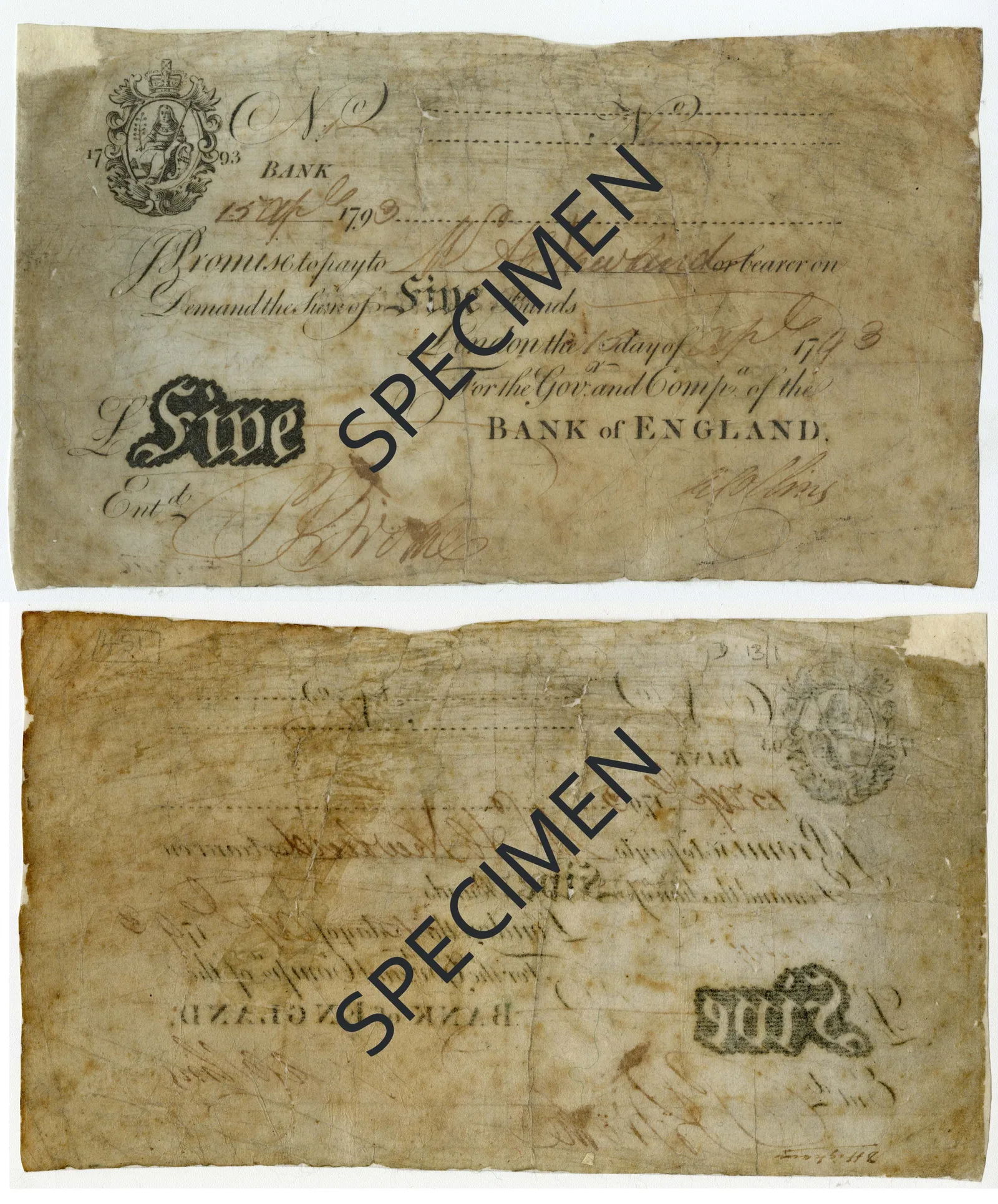
In 1694, the A bank founded in 1694, primarily to finance William III’s wars; its privileges included issuing notes.Source: Bank for International Settlements, United Kingdom — Ryland ThomasOpens in a new tab was founded primarily to finance William III’s wars. Ryland Thomas’s historical study, published by the BIS, explains that its charters gave it note-issuing privileges and a monopoly on joint-stock banking in England. Other English banks remained small partnerships until that monopoly ended in 1826.Source: Bank for International Settlements, United Kingdom — Ryland ThomasOpens in a new tabGo to the list of sources
Scotland developed a different banking system. The Bank of Scotland began in 1695 with monopoly privileges, but competition followed in 1727. The Bank of Ireland opened as a note-issuing bank in 1783. In 1845, the Scottish and Irish banking systems came within the Bank Charter Act 1844, which restricted the existing Scottish and Irish banks’ note issues and allowed no new note-issuing banks.Source: Bank for International Settlements, United Kingdom — Ryland ThomasOpens in a new tabGo to the list of sources
The 1707 union created a united free-trade area managed from London, according to the National Archives.Source: The National Archives (UK), Living in the 18th centuryOpens in a new tabGo to the list of sources
Article XVI of the Union with England Act 1707 required coin to have the same standard and value throughout the United Kingdom as now in England
Source: The National Archives, legislation.gov.uk; King's Printer of Acts of Parliament, Union with England Act 1707, article XVI (coinage)Opens in a new tabGo to the list of sources.Source: The National Archives, legislation.gov.uk; King's Printer of Acts of Parliament, Union with England Act 1707, article XVI (coinage)Opens in a new tabGo to the list of sources
The Currency Act 1825 later assimilated British and Irish currency. It described the existing par as one British pound to one Irish pound, one shilling and eightpence. Section II required existing Irish obligations to be paid in British currency at the stated Irish amount less one thirteenth. Section XVII set the Act’s commencement from and after 5 January 1826.Source: The National Archives, legislation.gov.uk; King's Printer of Acts of Parliament, Currency Act 1825 (6 Geo. 4 c. 79), as enactedOpens in a new tabGo to the list of sources
Under the Bank Charter Act 1844, the Bank of England’s note issue was separated from its general banking business. A distinct Issue Department held the assets backing the notes, including securities, gold coin, and gold and silver bullion. The Act also prohibited new note issuers.Source: The National Archives, legislation.gov.uk; King's Printer of Acts of Parliament, Bank Charter Act 1844Opens in a new tabGo to the list of sources
The break with gold
The Gold Standard Act 1925 required the Bank to sell gold bars at a prescribed price when someone paid in legal tender. Under this form of the A monetary system that bases the value of a currency unit on a fixed quantity of gold.Source: Deutsche Bundesbank, GlossaryOpens in a new tab, the Bank no longer had to pay its notes in the legal coin defined by the Bank of England Act 1833. The 1931 Act suspended the obligation to sell bullion.Source: The National Archives, legislation.gov.uk; King's Printer of Acts of Parliament, Gold Standard Act 1925Opens in a new tabGo to the list of sources Source: The National Archives, legislation.gov.uk; King's Printer of Acts of Parliament, Gold Standard (Amendment) Act 1931Opens in a new tabGo to the list of sources
Changing the divisions of the pound
Decimalisation required practical preparation. In 1969, All Change was produced for the Central Office of Information on behalf of the Decimal Currency Board. It gave shopkeepers a preview of trading after Decimal Day and explained why they needed to plan ahead.Source: National Records of Scotland, “D Day” 1971 – All ChangeOpens in a new tabGo to the list of sources
Parliament stated the purpose of the Decimal Currency Act 1967: An Act to provide for the introduction of a decimal currency in the year 1971
Source: The National Archives, legislation.gov.uk; King's Printer of Acts of Parliament, Decimal Currency Act 1967Opens in a new tabGo to the list of sources. It made the new penny one hundredth of a pound and regulated the The body responsible for preparing Britain’s change to decimal currency. It supplied information and advice and promoted the adaptation or replacement of equipment.Source: The National Archives, legislation.gov.uk; King's Printer of Acts of Parliament, Decimal Currency Act 1967Opens in a new tab, whose functions included facilitating the change. Decimal Day was 15 February 1971.Source: The National Archives, legislation.gov.uk; King's Printer of Acts of Parliament, Decimal Currency Act 1967Opens in a new tabGo to the list of sources Source: The National Archives, legislation.gov.uk; King's Printer of Acts of Parliament, Decimal Currency Act 1969: as enactedOpens in a new tabGo to the list of sources
One pound, different divisions
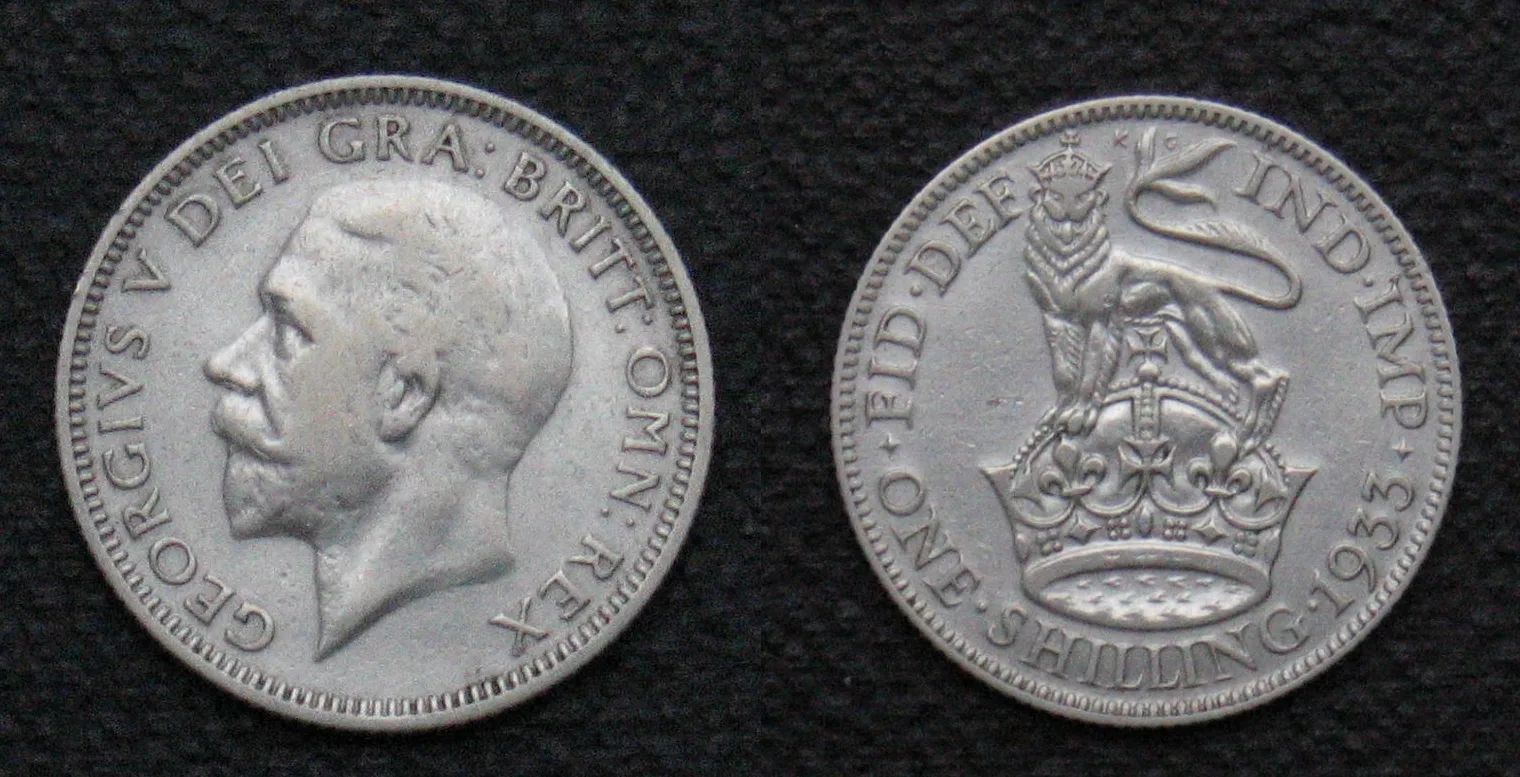
- Before Decimal Day20 shillings × 12 old pence = 240 old pence.Figures computed by FXtab from:The National Archives (UK), Currency converter: historical prices, wages, and calculation codeOpens in a new tabThe National Archives, legislation.gov.uk; King's Printer of Acts of Parliament, Decimal Currency Act 1967Opens in a new tabGo to the list of sources
- The pound staysOne pound becomes 100 new pence.Figures computed by FXtab from:The National Archives (UK), Currency converter: historical prices, wages, and calculation codeOpens in a new tabThe National Archives, legislation.gov.uk; King's Printer of Acts of Parliament, Decimal Currency Act 1967Opens in a new tabGo to the list of sources
- The same fractionOne shilling equals 5 new pence. One new penny equals 2.4 old pence.Figures computed by FXtab from:The National Archives (UK), Currency converter: historical prices, wages, and calculation codeOpens in a new tabThe National Archives, legislation.gov.uk; King's Printer of Acts of Parliament, Decimal Currency Act 1967Opens in a new tabGo to the list of sources
One shilling represented the same fraction of a pound as 5 new pence. This conversion changes the unit used to express an amount; it does not measure a change in purchasing power.Figures computed by FXtab from:The National Archives (UK), Currency converter: historical prices, wages, and calculation codeOpens in a new tabThe National Archives, legislation.gov.uk; King's Printer of Acts of Parliament, Decimal Currency Act 1967Opens in a new tabGo to the list of sources
What an old amount could buy
Converting old pence to new pence answers a question about units. Average earnings may be more suitable than retail prices for some comparisons, the converter cautions. The National Archives’ currency converter draws on records such as those of the royal household and Exchequer. Its records may show large purchases by government institutions rather than ordinary retail prices, and skilled craftsmen’s wages rather than the general level of earnings.Source: The National Archives (UK), Currency converter: 1270–2017Opens in a new tabGo to the list of sources
Throughout its entries for 1780–1820, the converter uses the same values: a daily skilled wage of £0.15, equal to 3 shillings, and a quarter of wheat at £5.69. In the converter, wheat is priced by the quarter. Dividing the wheat price by the wage gives about 38 days of pay. The comparison uses the converter’s values for that range.Figures computed by FXtab from:The National Archives (UK), Currency converter: historical prices, wages, and calculation codeOpens in a new tabThe National Archives, legislation.gov.uk; King's Printer of Acts of Parliament, Decimal Currency Act 1967Opens in a new tabGo to the list of sources Source: The National Archives (UK), Currency converter: 1270–2017Opens in a new tabGo to the list of sources
The banking history also draws on Ryland Thomas’s United Kingdom study, published by the BIS; its views are the author’s. The account of All Change draws on National Records of Scotland. FXtab calculated the examples from the archived sources. Licence attribution: Contains public sector information licensed under the Open Government Licence v3.0.
Source: The National Archives (UK), Open Government Licence for public sector information, version 3.0Opens in a new tabGo to the list of sources Licence.